What does Luke 16:5 mean?
“So he called every one of his lord’s debtors unto him, and said unto the first, How much owest thou unto my lord?” — Luke 16:5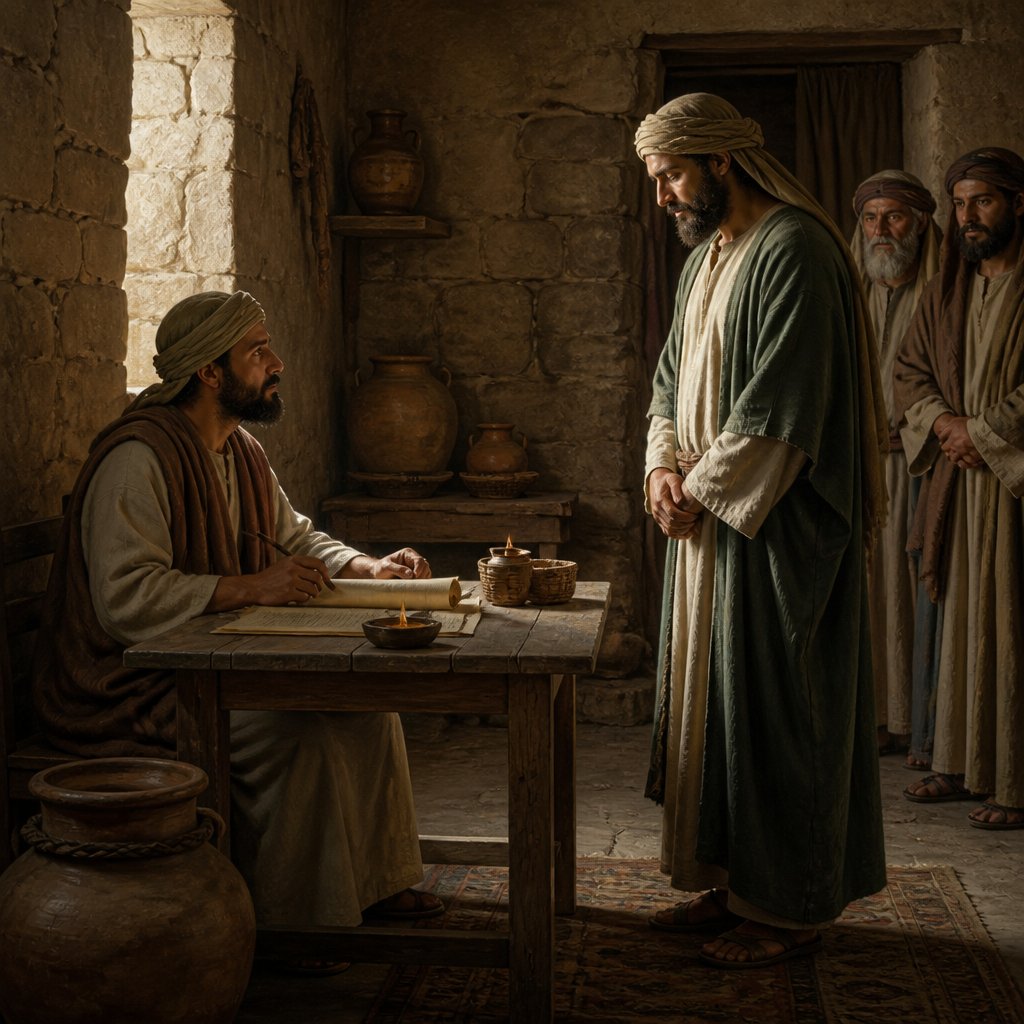
In Luke 16:5 of the King James Version (KJV) of the Bible, the verse reads: "So he called every one of his lord's debtors unto him, and said unto the first, How much owest thou unto my lord?" This verse is part of a larger parable told by Jesus about a shrewd manager who was praised for his clever and strategic actions by his master. The parable is found in Luke 16:1-13.
In this parable, Jesus tells the story of a rich man who had a manager who was accused of wasting his possessions. The rich man called the manager in and told him to give an account of his management, as he was going to be dismissed. Before leaving his position, the manager set about to save his own skin. He called in the people who owed his master money and reduced their debts. By doing this, he gained favor with the debtors, who would likely help him out when he was in need.
The actions of the shrewd manager might seem unethical, but Jesus used this story to illustrate a larger point about the use of wealth and the kingdom of God. Instead of condoning the manager’s actions, Jesus was demonstrating that the “people of this world” (non-believers) are often more shrewd in dealing with their own kind than “the people of the light” (believers) are in dealing with their fellow believers. This prompts Jesus to instruct his followers to use wealth to gain friends for themselves, so that when it is gone, they will be welcomed into eternal dwellings.
The parable thus brings to light the tension between the value system of the world and that of the kingdom of God. In the world, the manager’s actions might be seen as clever and strategic, but in the kingdom of God, the focus is on righteous and ethical behavior. However, the parable also highlights the importance of using worldly wealth in a way that aligns with the values of the kingdom of God. It urges believers to be wise and strategic in using their resources to advance the kingdom of God and to cultivate relationships that have eternal significance.
The verse, Luke 16:5, then, is an important part of the larger parable in that it shows the specific action taken by the manager to call in his lord’s debtors and negotiate with them. This action is used as an example by Jesus to illustrate the shrewdness of the manager in dealing with the resources at his disposal.
In terms of symbolism, the parable can be seen as a reflection of the Christian’s responsibility to be wise stewards of the resources and opportunities that are entrusted to them. It highlights the importance of using worldly wealth in a way that aligns with the values of the kingdom of God, rather than being solely focused on personal gain or success. The parable also speaks to the tension between the values of the world and those of the kingdom of God, and the need for believers to navigate this tension with wisdom and discernment.
Overall, Luke 16:5 and the larger parable it is a part of, challenges believers to consider how they are using the resources and opportunities at their disposal and to be strategic and thoughtful in their actions. It prompts them to align their values and priorities with those of the kingdom of God, and to use their resources in a way that has eternal significance.
Get our apps


Artwork for Luke 16:5
Luke 16:5 - "So he called every one of his lord's debtors unto him, and said unto the first, How much owest thou unto my lord?"
"So he called every one of his lord's debtors unto him, and said unto the first, How much owest thou unto my lord?" - Luke 16:5

Luke 5:16 - "¶ And he withdrew himself into the wilderness, and prayed."

"¶ And he withdrew himself into the wilderness, and prayed." - Luke 5:16

"¶ And he withdrew himself into the wilderness, and prayed." - Luke 5:16

"¶ And he withdrew himself into the wilderness, and prayed." - Luke 5:16

luke 5:5

Luke 8:16

luke 4:16

Luke 10:5

Luke 10:5

Luke 10:5

Luke 16:1-13

Luke 16:1-1313

Luke 16:22-26

Luke 16:1-13

Luke 16:1-13

Luke 2:16 - 21

Luke 5:36

Luke 5:39

Luke 16:16 - "The law and the prophets were until John: since that time the kingdom of God is preached, and every man presseth into it."

Luke 24:16 - "But their eyes were holden that they should not know him."

Luke 23:16 - "I will therefore chastise him, and release him."

Luke 8:5-8

Luke 5:1-11

Luke 5:17-26

Luke 5:1-11

luke 21:5-19

Galatians 5:16-17

Galatians 5:16-17