What does Luke 9:9 mean?
“And Herod said, John have I beheaded: but who is this, of whom I hear such things? And he desired to see him.” — Luke 9:9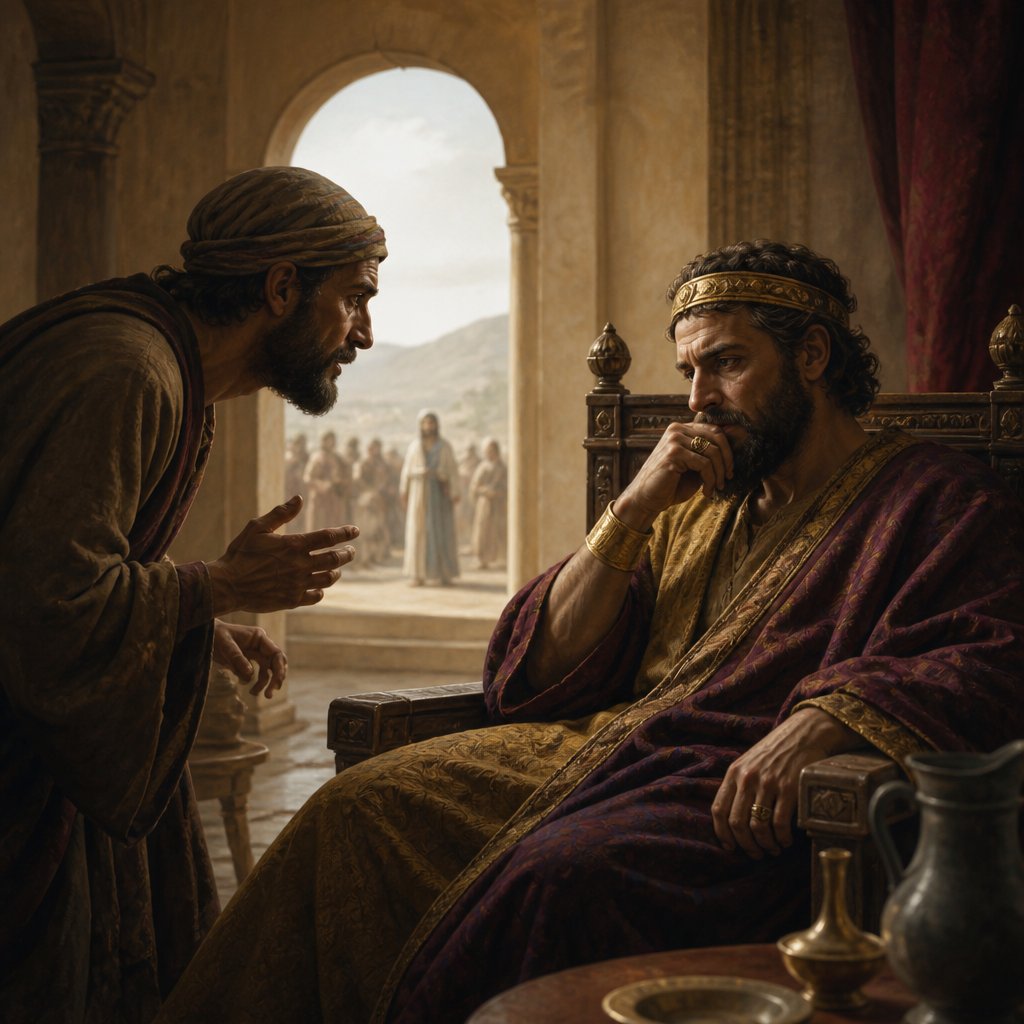
The Bible verse Luke 9:9 from the King James Version states, "And Herod said, John have I beheaded: but who is this, of whom I hear such things? And he desired to see him." This verse provides insight into the character of King Herod as well as the growing influence and impact of Jesus Christ during His earthly ministry.
To fully understand the meaning and significance of this verse, it is important to consider the larger context in which it is situated. In the previous verses, Jesus had sent out His twelve disciples to preach the kingdom of God and to heal the sick. As a result, reports of His miracles and teachings were spreading throughout the region, causing great curiosity and speculation among the people. It is in this context that King Herod becomes keenly aware of Jesus and the extraordinary events surrounding Him.
Herod's response to this news is one of both curiosity and alarm. He is troubled by the reports of Jesus' works and teachings, and his first question reveals a sense of perplexity and uncertainty. The fact that he was not fully aware of who Jesus was, despite the spreading of His fame, indicates that Jesus' ministry and message were causing a stir that reached even the highest levels of society. Herod's desire to see Jesus may have been driven by a mixture of curiosity, fear, and perhaps a desire to confirm the rumors circulating about Him.
The verse also sheds light on the fate of John the Baptist, who had been beheaded by Herod. The reference to John's death serves as a reminder of the persecution and opposition that Jesus and His disciples were facing for their proclamation of the kingdom of God. It underscores the dangerous political and religious climate in which Jesus lived and ministered, as well as the personal risks that He and His followers faced as a result of their faithfulness to God's calling.
More broadly, this verse demonstrates the contrasting attitudes toward Jesus that were prevalent in society at the time. While many people were drawn to Jesus because of His message of hope, healing, and salvation, others, like Herod, were unsettled and threatened by His growing influence. This dichotomy of responses highlights the polarizing nature of Jesus' ministry, as He challenged the status quo and demanded a decision from those who heard His message.
Symbolically, the verse can be seen as a foreshadowing of Jesus' impending trial and crucifixion. Just as Herod was perplexed by the reports of Jesus' identity and desired to see Him, so too would Pilate later be faced with the decision of what to do with Jesus. The verse also reveals the contrast between the earthly power and authority of Herod, which ultimately led to John the Baptist's death, and the divine power and authority of Jesus, which would ultimately conquer sin and death through His sacrificial death and resurrection.
In conclusion, Luke 9:9 presents a rich tapestry of themes and implications that resonate throughout the broader narrative of Jesus' life and ministry. It offers a glimpse into the political and social dynamics of the time, as well as the spiritual significance of Jesus' impact on those around Him. Ultimately, it points to the central truth that Jesus Christ, the Son of God, came into the world to proclaim the kingdom of God and to fulfill God's redemptive plan through His death and resurrection.
Get our apps


Artwork for Luke 9:9

Luke 9:9 - "And Herod said, John have I beheaded: but who is this, of whom I hear such things? And he desired to see him."
"And Herod said, John have I beheaded: but who is this, of whom I hear such things? And he desired to see him." - Luke 9:9
Luke 11:9

luke 9:30

luke 9:35

luke 9:35

Luke 9:51

Luke 11:9

Luke 9:54-55

Luke 18:9-14

Luke 9:28-45

Luke 11:9-10

Luke 13:6-9

Luke 18: 9-14

luke 9:29- 30

Luke 9:4 - "And whatsoever house ye enter into, there abide, and thence depart."

Luke 9:15 - "And they did so, and made them all sit down."

Black and white illustration Luke 11:9

Black and white illustration Luke 11:9

Luke 9:40 - "And I besought thy disciples to cast him out; and they could not."

Luke 9:2 - "And he sent them to preach the kingdom of God, and to heal the sick."

Luke 8:9 - "And his disciples asked him, saying, What might this parable be?"

Luke 22:9 - "And they said unto him, Where wilt thou that we prepare?"

Luke 13:9 - "And if it bear fruit, well: and if not, then after that thou shalt cut it down."

Luke 9:46 - "¶ Then there arose a reasoning among them, which of them should be greatest."

Black and white illustration Luke 11:9

Luke 9:6 - "And they departed, and went through the towns, preaching the gospel, and healing every where."

Luke 9:47 - "And Jesus, perceiving the thought of their heart, took a child, and set him by him,"

Luke 23:9 - "Then he questioned with him in many words; but he answered him nothing."

Luke 9:30 - "And, behold, there talked with him two men, which were Moses and Elias:"