What does Mark 11:25 mean?
“And when ye stand praying, forgive, if ye have ought against any: that your Father also which is in heaven may forgive you your trespasses.” — Mark 11:25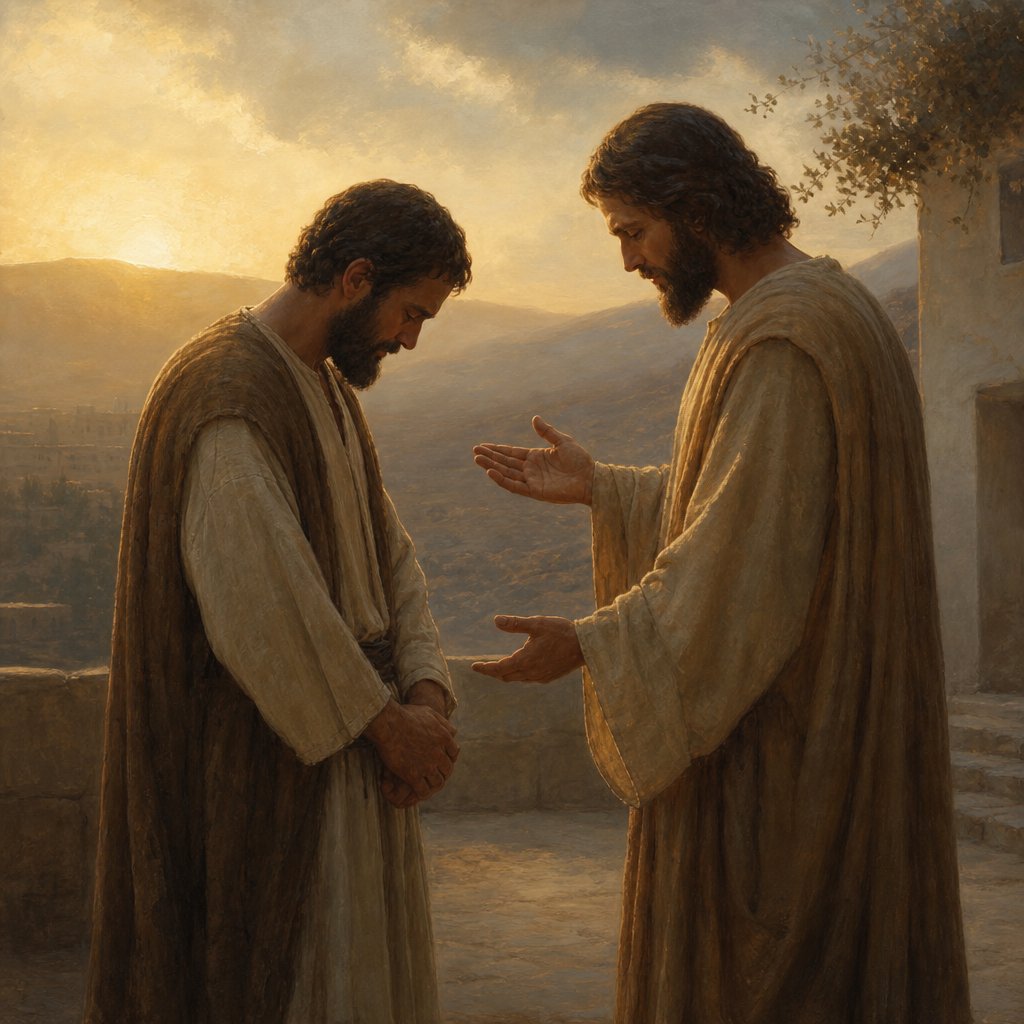
Mark 11:25 in the King James Version reads, “And when ye stand praying, forgive, if ye have ought against any: that your Father also which is in heaven may forgive you your trespasses.”
In its plain sense, the verse joins two actions that many people instinctively separate: prayer and forgiveness. Jesus speaks as though forgiving others is not merely a noble add-on to devotion, but something that belongs inside the act of praying itself. The scene He imagines is immediate and practical: “when ye stand praying.” In that ordinary posture of worship—standing, conscious of God, addressing heaven—He commands a deliberate inward act: “forgive, if ye have ought against any.” The language is broad. “Ought” is anything at all—any grievance, any claim, any resentment held against “any,” without exception. In the very moment a person approaches God, Jesus calls the heart to release what it is gripping.
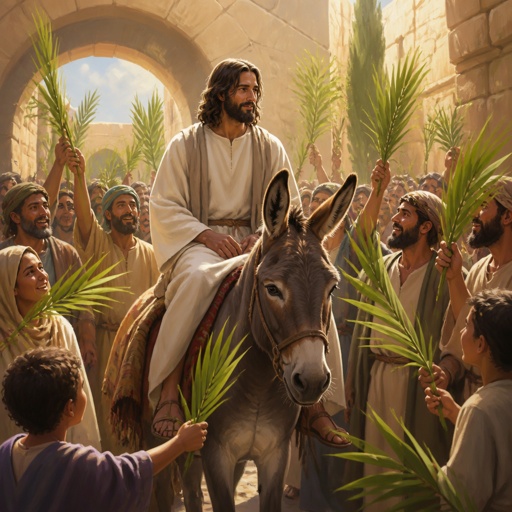
The context deepens the meaning. Mark places these words in the final week before the crucifixion, after Jesus has entered Jerusalem, cleansed the temple, and taught with authority. Just before verse 25, Jesus speaks about faith and prayer in connection with the withered fig tree, saying that whoever believes and doubts not may ask and receive. Immediately after encouraging bold prayer, He presses a moral condition that tests whether faith is living and obedient: the praying person must also be a forgiving person. In other words, Jesus does not present prayer as a technique for getting one’s will done, but as communion with the Father—a communion that is disrupted when a worshipper clings to resentment. The placement is significant: strong promises about prayer are framed by a strong demand for a reconciled heart.
The verse also carries temple symbolism through the details Mark gives. “Stand praying” evokes the posture of public worship associated with the temple courts, which Jesus has just purified. He has condemned a house that should have been “the house of prayer” being made corrupt, and now He turns to another kind of corruption that can exist even when the lips are praying: inward bitterness. The cleansing of the temple outside corresponds to the cleansing of the heart within. The worship God receives is not only about correct location or correct words, but about a life brought into alignment with God’s own character.
The central theme is the relationship between human forgiveness and divine forgiveness. Jesus gives a purpose clause: “that your Father also which is in heaven may forgive you your trespasses.” The word “that” ties the command to a reason; forgiveness toward others is linked to experiencing forgiveness from God. This does not mean that human forgiveness purchases God’s mercy as though God were reluctant and must be paid with moral effort. Rather, the verse speaks of congruity and spiritual reality: a person asking the Father for pardon while refusing pardon to others is asking for a grace he is actively resisting. The heart that will not forgive is a heart that is closing itself against the very thing it claims to seek. Jesus presents forgiveness not as a mere feeling but as a decision that opens the worshipper to live within the Father’s forgiving order.
Calling God “your Father also which is in heaven” shapes the whole command. The title “Father” brings intimacy, moral resemblance, and family likeness. Children are to reflect the Father; therefore those who come as children to pray are to carry the Father’s disposition into their dealings with others. Yet He is “in heaven,” exalted, holy, and the final judge. That heavenly Father is not indifferent to the way His children treat one another. The verse holds together tenderness and authority: the One who forgives is near as Father, and He is above all as the heavenly Lord who measures the truth of prayer.
The phrase “trespasses” adds another layer. A trespass is a real offense, a crossing of a boundary; it is not limited to small slights. Jesus does not pretend that wrongs are imaginary. He assumes that grievances exist—“if ye have ought against any.” Forgiving, then, is not denying the wrong; it is releasing the claim to repay it, letting go of vengeance, and surrendering the case into God’s hands. The verse places that release right where a person is tempted to present himself as spiritually serious: in prayer. It implies that unresolved grudges are not morally neutral; they are spiritual obstacles that reach up into a person’s communion with God.
There is also a quiet call to immediacy. “When ye stand praying, forgive” suggests that forgiveness is not postponed to a more convenient time. If, in the act of praying, the worshipper knows he is holding something against someone, that is the moment to obey. The verse therefore treats forgiveness as part of readiness before God, like clearing the ground before planting. Prayer, in Mark 11, is portrayed as powerful; forgiveness ensures that the person praying is not using God’s name while nurturing hostility.
Ultimately, Mark 11:25 is significant because it shows the moral shape of true faith. The passage around it speaks of believing prayer, but Jesus anchors that faith in a life that reflects God’s mercy. The Father’s forgiveness is presented not as a detached doctrine but as a living relationship that reshapes how the forgiven person treats others. In this way the verse becomes both a warning and an invitation: a warning that a hard heart cannot enjoy the freedom of pardon, and an invitation to bring resentments into the presence of the Father and let them go, so that prayer may be honest, worship may be clean, and the forgiven may live as those who truly know the Forgiver.
Get our apps


Artwork for Mark 11:25

Mark 11:25 - "And when ye stand praying, forgive, if ye have ought against any: that your Father also which is in heaven may forgive you your trespasses."
"And when ye stand praying, forgive, if ye have ought against any: that your Father also which is in heaven may forgive you your trespasses." - Mark 11:25

Mark 15:25 - "And it was the third hour, and they crucified him."

Mark 3:25 - "And if a house be divided against itself, that house cannot stand."
Mark 11:36

Mark 13:25 - "And the stars of heaven shall fall, and the powers that are in heaven shall be shaken."

Mark 5:25 - "And a certain woman, which had an issue of blood twelve years,"

"And it was the third hour, and they crucified him." - Mark 15:25

Mark 1:25 - "And Jesus rebuked him, saying, Hold thy peace, and come out of him."

Philippians 2:5-11

Micah 5:2-5

Mark 10:25 - "It is easier for a camel to go through the eye of a needle, than for a rich man to enter into the kingdom of God."

Mark 12:11 - "This was the Lord's doing, and it is marvellous in our eyes?"
Genesis 25-11

african american mark 16:11

Mark 12:25 - "For when they shall rise from the dead, they neither marry, nor are given in marriage; but are as the angels which are in heaven."

Mark 11:19 - "And when even was come, he went out of the city."

Mark 7:25 - "For a certain woman, whose young daughter had an unclean spirit, heard of him, and came and fell at his feet:"

Romans 11:25-32

Matthew 25:11-13

Mark 4:25 - "For he that hath, to him shall be given: and he that hath not, from him shall be taken even that which he hath."

Acts 12:25 - "And Barnabas and Saul returned from Jerusalem, when they had fulfilled their ministry, and took with them John, whose surname was Mark."

Mark 11:30 - "The baptism of John, was it from heaven, or of men? answer me."

Mark 6:25 - "And she came in straightway with haste unto the king, and asked, saying, I will that thou give me by and by in a charger the head of John the Baptist."

Mark 11:22 - "And Jesus answering saith unto them, Have faith in God."

Mark 11:12 - "¶ And on the morrow, when they were come from Bethany, he was hungry:"

Mark 5:11 - "Now there was there nigh unto the mountains a great herd of swine feeding."

"And if a house be divided against itself, that house cannot stand." - Mark 3:25

Mark 11:20 - "¶ And in the morning, as they passed by, they saw the fig tree dried up from the roots."

Acts 11:25 - "Then departed Barnabas to Tarsus, for to seek Saul:"