What does Nehemiah 2:10 mean?
“When Sanballat the Horonite, and Tobiah the servant, the Ammonite, heard of it, it grieved them exceedingly that there was come a man to seek the welfare of the children of Israel.” — Nehemiah 2:10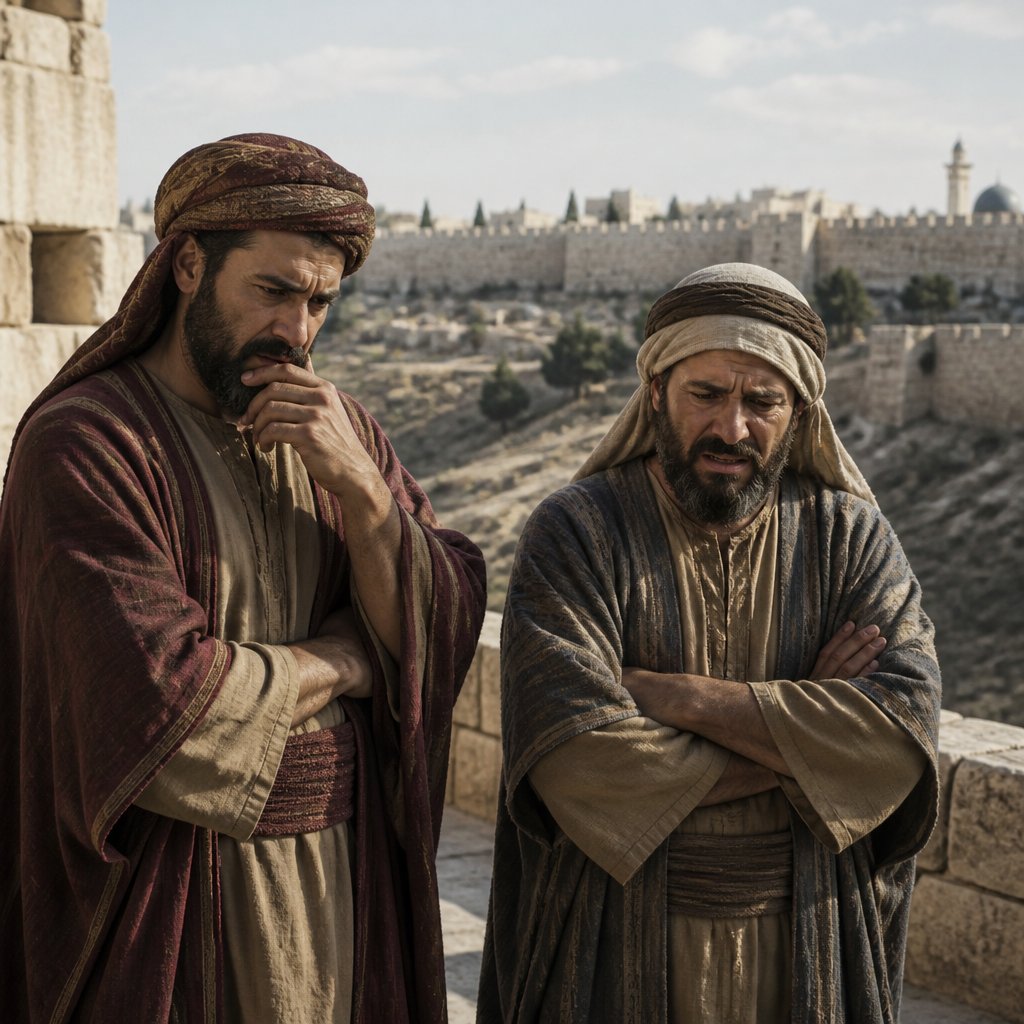
Nehemiah 2:10 (KJV) reads, "When Sanballat the Horonite, and Tobiah the servant, the Ammonite, heard of it, it grieved them exceedingly that there was come a man to seek the welfare of the children of Israel."
The book of Nehemiah is set during the period of the Israelites' exile in Babylon. Nehemiah receives news from his brother Hanani, who has just returned from Jerusalem, that the wall of Jerusalem is in disrepair. This news deeply troubles Nehemiah, and he goes before King Artaxerxes, who allows him to return to Jerusalem to rebuild the city wall. This verse occurs when Nehemiah arrives in Jerusalem and begins to assess the situation.
Sanballat the Horonite and Tobiah the Ammonite were two significant figures in the opposition Nehemiah faced as he set out to rebuild the wall of Jerusalem. Sanballat was a governor of Samaria, and Tobiah was an influential figure in the Ammonite community. When they heard of Nehemiah's arrival and his intentions to restore the city, it greatly troubled and angered them. This verse sets the stage for the conflict and opposition Nehemiah would face as he endeavored to fulfill his God-given mission.
The theme of opposition and adversity in the face of a noble cause is prevalent throughout the book of Nehemiah. As Nehemiah sought to rebuild the city wall, he encountered resistance from various individuals who sought to thwart his efforts. This opposition serves as a reminder that God's work often faces challenges from those who do not align with His purposes. However, Nehemiah's steadfastness and determination in the face of this opposition is a testament to his faith and reliance on God's strength to see him through.
The verse also underscores the significance of seeking the welfare of others. Nehemiah's heart was burdened for the city of Jerusalem and the well-being of its people. His dedication to this cause serves as an example of selflessness and compassion, as he willingly left his position of comfort and security in the Persian court to take on the daunting task of rebuilding Jerusalem. Nehemiah's actions highlight the importance of prioritizing the needs of others and working towards their betterment, even in the face of opposition and personal sacrifice.
Furthermore, the verse sheds light on the theme of spiritual warfare. Sanballat and Tobiah's reaction to Nehemiah's arrival reflects the spiritual opposition that often arises when individuals seek to carry out God's work. Their displeasure at Nehemiah's intentions reveals a deeper, unseen battle taking place in the spiritual realm. This aspect of the verse serves as a reminder that believers are engaged in a spiritual war, and that opposition and challenges may arise when pursuing God's purposes.
Symbolically, Sanballat and Tobiah represent the forces of opposition and antagonism that often arise when God's people seek to fulfill His calling. Their reaction to Nehemiah's arrival serves as a symbolic representation of the resistance that can be encountered when endeavoring to bring about positive change and restoration in accordance with God's will. Their opposition serves as a reminder that the path of obedience and service to God may be met with resistance, but ultimately, His purposes will prevail.
In conclusion, Nehemiah 2:10 conveys the themes of opposition, compassion, and spiritual warfare that are prevalent throughout the book of Nehemiah. It serves as a poignant reminder of the challenges and obstacles that can arise when pursuing God's purposes, as well as the importance of prioritizing the welfare of others and remaining steadfast in the face of adversity. The verse also provides symbolic significance, portraying the opposition faced by Nehemiah as a representation of the spiritual warfare that believers may encounter when seeking to carry out God's work. Ultimately, Nehemiah's unwavering commitment to his mission and his reliance on God's strength serve as an inspiration and example for believers to persevere in their own journeys of faith and service.
Get our apps


Artwork for Nehemiah 2:10

Nehemiah 2:10 - "When Sanballat the Horonite, and Tobiah the servant, the Ammonite, heard of it, it grieved them exceedingly that there was come a man to seek the welfare of the children of Israel."
"When Sanballat the Horonite, and Tobiah the servant, the Ammonite, heard of it, it grieved them exceedingly that there was come a man to seek the welfare of the children of Israel." - Nehemiah 2:10

Nehemiah 10:2 - "Seraiah, Azariah, Jeremiah,"

"Seraiah, Azariah, Jeremiah," - Nehemiah 10:2

Nehemiah 10:1 - "Now those that sealed were, Nehemiah, the Tirshatha, the son of Hachaliah, and Zidkijah,"

Nehemiah 10:10 - "And their brethren, Shebaniah, Hodijah, Kelita, Pelaiah, Hanan,"

Nehemiah 8:10

Nehemiah 8:10

Nehemiah 8:10

Nehemiah 10:24 - "Hallohesh, Pileha, Shobek,"

Nehemiah 10:22 - "Pelatiah, Hanan, Anaiah,"

Nehemiah 10:5 - "Harim, Meremoth, Obadiah,"

Nehemiah 10:23 - "Hoshea, Hananiah, Hashub,"

Nehemiah 10:21 - "Meshezabeel, Zadok, Jaddua,"

Nehemiah 10:7 - "Meshullam, Abijah, Mijamin,"

Nehemiah 10:11 - "Micha, Rehob, Hashabiah,"

Nehemiah 10:27 - "Malluch, Harim, Baanah."

Nehemiah 10:25 - "Rehum, Hashabnah, Maaseiah,"

Nehemiah 10:19 - "Hariph, Anathoth, Nebai,"

Nehemiah 10:6 - "Daniel, Ginnethon, Baruch,"

Nehemiah 10:26 - "And Ahijah, Hanan, Anan,"

Nehemiah 10:16 - "Adonijah, Bigvai, Adin,"

Nehemiah 10:18 - "Hodijah, Hashum, Bezai,"

Nehemiah 10:20 - "Magpiash, Meshullam, Hezir,"

Nehemiah 10:3 - "Pashur, Amariah, Malchijah,"

Nehemiah 10:17 - "Ater, Hizkijah, Azzur,"

Nehemiah 10:4 - "Hattush, Shebaniah, Malluch,"

Nehemiah 10:12 - "Zaccur, Sherebiah, Shebaniah,"

Nehemiah 10:15 - "Bunni, Azgad, Bebai,"

Nehemiah 10:13 - "Hodijah, Bani, Beninu."