What does Philippians 2:27 mean?
“For indeed he was sick nigh unto death: but God had mercy on him; and not on him only, but on me also, lest I should have sorrow upon sorrow.” — Philippians 2:27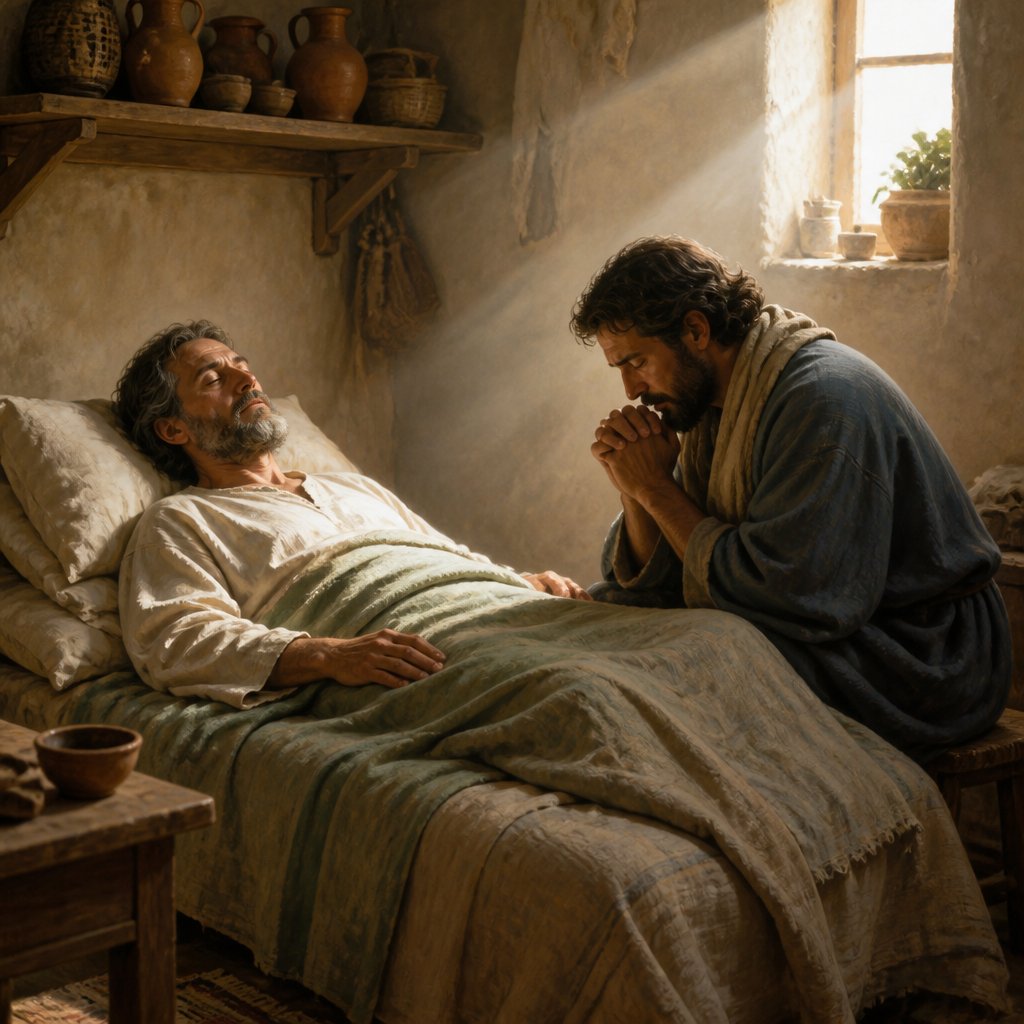
Philippians 2:27 in the King James Version (KJV) reads: "For indeed he was sick nigh unto death: but God had mercy on him; and not on him only, but on me also, lest I should have sorrow upon sorrow."
This verse is a part of Paul's letter to the Philippians, in which he expresses his deep concern for his fellow Christian, Epaphroditus, who had been unwell. The verse conveys a powerful message about the nature of suffering, the mercy of God, and the importance of community within the context of the early Christian church.
First and foremost, this verse underscores the significance of human suffering and the impact it has on the individual and those around them. Epaphroditus' illness was severe, as evidenced by the phrase "sick nigh unto death." This language conveys the gravity of his condition and the distress it caused both him and those who cared for him. The verse serves as a reminder of the reality of human frailty and the physical and emotional toll that sickness can take on individuals and their loved ones.
In the face of this suffering, Paul emphasizes the mercy of God. He acknowledges that despite the severity of Epaphroditus' illness, God had shown mercy by sparing his life. This acknowledgment of divine mercy highlights the belief in the power of God to heal and to provide comfort in times of distress. It also serves as a testament to the faith of the early Christians, who looked to God for solace and strength in the midst of their trials and tribulations.
Furthermore, Paul's personal response to Epaphroditus' illness reinforces the theme of community and the interconnectedness of believers within the Christian faith. He articulates that God's mercy extended not only to Epaphroditus but also to himself, as he feared the sorrow of losing a beloved member of his Christian community. This sentiment underscores the deep bonds of fellowship and compassion that defined the early Christian church, as well as the shared responsibility of its members to support and care for one another in times of need.
Symbolically, the illness and recovery of Epaphroditus can be interpreted as a metaphor for the challenges and trials that believers face in their spiritual journeys. The suffering and subsequent mercy and healing serve as a reflection of the broader human experience and the Christian belief in the redemptive power of God.
Overall, Philippians 2:27 offers a profound reflection on the nature of human suffering, the mercy of God, and the importance of communal support within the Christian faith. It serves as a poignant reminder of the interconnectedness of believers and the belief in God's ability to provide comfort and healing in times of hardship. As such, this verse continues to resonate with Christians as a source of inspiration and hope in the face of adversity.
Get our apps


Artwork for Philippians 2:27

Philippians 2:27 - "For indeed he was sick nigh unto death: but God had mercy on him; and not on him only, but on me also, lest I should have sorrow upon sorrow."
"For indeed he was sick nigh unto death: but God had mercy on him; and not on him only, but on me also, lest I should have sorrow upon sorrow." - Philippians 2:27

Philippians 2:7

Philippians 2:7

Philippians 2:7

Philippians 2:7

Philippians 1:27

Philippians 2:7 - "But made himself of no reputation, and took upon him the form of a servant, and was made in the likeness of men:"

Philippians 2:2

Philippians 2:29

Philippians 2:3

Philippians 2:3

Philippians 3:2

"But made himself of no reputation, and took upon him the form of a servant, and was made in the likeness of men:" - Philippians 2:7

Philippians 2:11

Philippians 2:3

Philippians 2:15

Philippians 2:9-11

Philippians 2:9-11

Philippians 2:9-11

Philippians 2:5-18

Philippians 2:19-30

Philippians 2:9-11

Philippians 2:5-18

Philippians 2:5-11

Philippians 2:14 - "Do all things without murmurings and disputings:"

Philippians 2:6 - "Who, being in the form of God, thought it not robbery to be equal with God:"

Philippians 2:29 - "Receive him therefore in the Lord with all gladness; and hold such in reputation:"

Philippians 2:18 - "For the same cause also do ye joy, and rejoice with me."

Philippians 2:5 - "Let this mind be in you, which was also in Christ Jesus:"