What does Ruth 2:12 mean?
“The LORD recompense thy work, and a full reward be given thee of the LORD God of Israel, under whose wings thou art come to trust.” — Ruth 2:12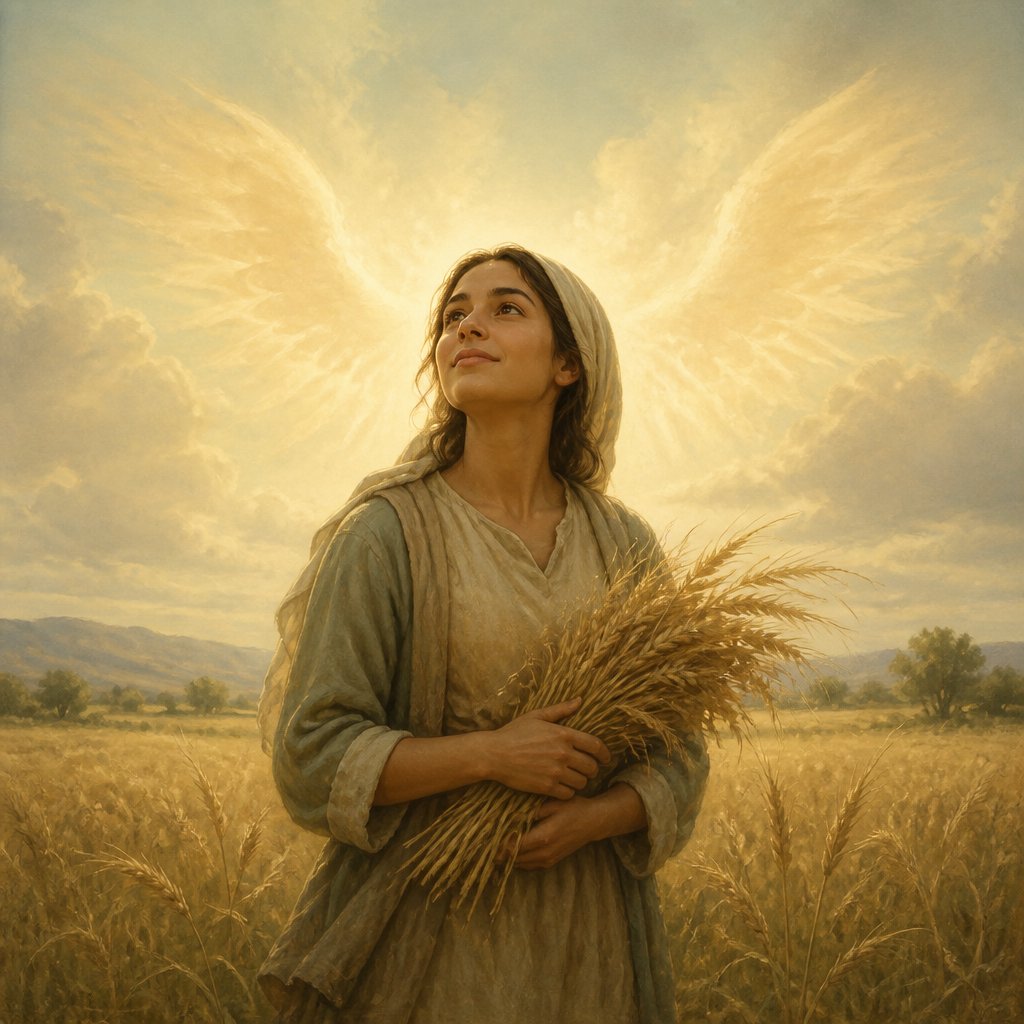
Ruth 2:12 in the King James Version reads, “The LORD recompense thy work, and a full reward be given thee of the LORD God of Israel, under whose wings thou art come to trust.”
In its immediate context this sentence is spoken by Boaz to Ruth in the field at Bethlehem, at the moment when he has learned who she is and what she has done. Ruth is not a native daughter of Israel; she is “Ruth the Moabitess,” a widow who has voluntarily left her own land and people to cling to Naomi, her Israelite mother in law, and to seek life among the covenant people. She is gleaning behind the reapers, taking the place of the poor and the stranger, depending on the mercy that God’s law had built into Israel’s harvest practices. When Boaz blesses her, he is not merely being polite. He is interpreting her whole story theologically. He recognizes that what looks like human loyalty and hard work is also a spiritual movement: Ruth has crossed from the securities of her past into the risk of faith, and she has done it not mainly for a man or a new homeland but in response to the God Naomi serves.
“The LORD recompense thy work” sets Ruth’s actions in the moral universe of God’s justice and providence. “Work” here is not only the labor of gleaning; it gathers up her costly decisions: her care for Naomi, her renunciation of Moab, her willingness to become a stranger in Bethlehem, and her humble diligence in the field. Boaz is saying that God is a God who sees unseen faithfulness and who answers it, not because God is indebted to man, but because He is righteous, faithful, and gracious. The word “recompense” carries the sense of God giving what is fitting, a divine answering of a human life, and it implies that Ruth’s story is not going to end in mere survival. Her labor and love are being acknowledged before God.
“And a full reward be given thee of the LORD God of Israel” intensifies the blessing. A “full reward” suggests completeness, not a partial repayment or a thin consolation. It points beyond the handfuls of grain Ruth is gathering to a larger wholeness: provision, belonging, protection, and a future. In the narrative, that “full reward” begins to take shape through Boaz’s kindness and eventually through redemption and marriage, but the verse frames the reward as coming “of the LORD God of Israel.” Boaz may become the instrument, but God is the giver. That is crucial in Ruth, because the book consistently shows ordinary human actions—gleaning, a conversation in a field, a kinsman’s willingness to redeem—as the hidden methods of God’s faithful care. The “full reward” is therefore both material and spiritual: food for today and a place within the covenant community; relief from bitterness for Naomi and a new household; and ultimately, through Ruth’s line, a contribution to the history that leads to David. Yet even without tracing later generations, the verse itself is already teaching that God’s reward is comprehensive, extending to the whole life of one who seeks refuge in Him.
The central image, “under whose wings thou art come to trust,” is rich with symbolism and sets the deepest meaning of the verse. Wings evoke refuge, warmth, shelter, and protection. It is the picture of a vulnerable one drawing near to a stronger one, as a bird gathers its young. The phrase does not describe casual belief but an act of taking shelter, the movement of the soul into safety. Ruth has “come” to trust; she has made a journey of faith. In leaving Moab, she has in effect stepped out from under other coverings—family, familiar gods, national identity—and has sought protection in the LORD. The verse thus interprets Ruth’s loyalty to Naomi as part of a larger conversion of allegiance. She has not merely attached herself to a person; she has attached herself to the God of Israel.
This wing imagery also carries covenant overtones. To come under God’s wings is to come within the sphere of His pledged care. That matters because Ruth is a stranger and a Moabitess; socially she stands at the margins. The blessing declares that the LORD’s refuge is not limited by ethnicity or past. The story does not deny Ruth’s outsider status—it names it repeatedly—but it insists that faith can bring an outsider into the place of shelter. The verse therefore holds a theme that runs through the whole book: the widening reach of God’s mercy, and the way covenant kindness is meant to be embodied by God’s people. Boaz’s blessing is itself an act consistent with God’s character; he is doing in the field what he prays God will do in Ruth’s life.
Another theme in Ruth 2:12 is the connection between trust and reward. The verse does not present reward as a mechanical payment, as though Ruth has earned God in a strict commercial sense. Rather, it ties reward to refuge. The “full reward” is what comes to the one who has come for shelter. Ruth’s “work” is real, but it is the work of faith expressed through love and loyalty. Her work is the outward shape of her inward trust. The verse therefore honors both human responsibility and divine grace: Ruth acts courageously, and God answers faithfully; Boaz recognizes her effort, and he directs the glory to the LORD.
The significance of the verse is heightened when read against Naomi’s earlier emptiness. Naomi returned to Bethlehem feeling that the Almighty had dealt bitterly with her, and Ruth arrived with her, apparently with nothing but devotion. Ruth 2:12 stands as a turning point in tone. It speaks hope into a situation that began in loss. The God who seemed distant in Naomi’s grief is now invoked as the One who recompenses and rewards. The “wings” image implies that what appeared to be mere hardship and displacement has actually been a guided movement toward refuge. In that way the verse becomes a quiet proclamation of providence: God is at work not only in miracles but in migrations, in gleaning, in introductions, and in the steady courage of a faithful woman.
Finally, the verse subtly prepares the reader for later developments by introducing the idea of “wings” as a symbol of covering and protection, a theme that will echo in the unfolding of redemption. Without leaving the words of this verse, one can already see its theological center: Ruth has come to the LORD for shelter, and the LORD is the One who gives a complete and fitting answer to the life that entrusts itself to Him. Boaz’s blessing is therefore both prayer and prophecy in tone, locating Ruth’s future not in chance but “of the LORD God of Israel, under whose wings” she has taken refuge.
Get our apps


Artwork for Ruth 2:12

Ruth 2:12 - "The LORD recompense thy work, and a full reward be given thee of the LORD God of Israel, under whose wings thou art come to trust."
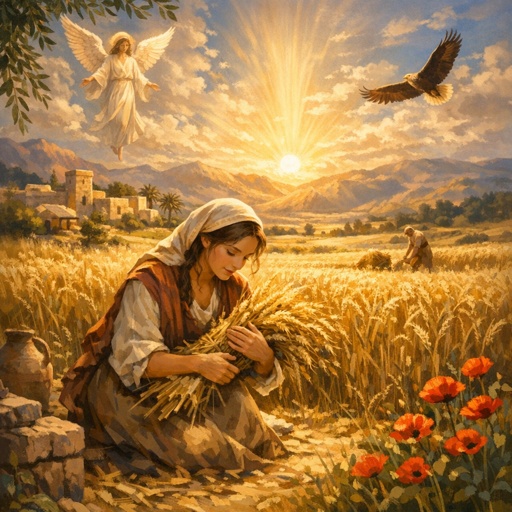
"The LORD recompense thy work, and a full reward be given thee of the LORD God of Israel, under whose wings thou art come to trust." - Ruth 2:12
"The LORD recompense thy work, and a full reward be given thee of the LORD God of Israel, under whose wings thou art come to trust." - Ruth 2:12

Ruth 2:2 - "And Ruth the Moabitess said unto Naomi, Let me now go to the field, and glean ears of corn after him in whose sight I shall find grace. And she said unto her, Go, my daughter."

Ruth 2:22 - "And Naomi said unto Ruth her daughter in law, It is good, my daughter, that thou go out with his maidens, that they meet thee not in any other field."

Ruth 3:12 - "And now it is true that I am thy near kinsman: howbeit there is a kinsman nearer than I."

Ruth 2:8 - "Then said Boaz unto Ruth, Hearest thou not, my daughter? Go not to glean in another field, neither go from hence, but abide here fast by my maidens:"

Ruth 2:21 - "And Ruth the Moabitess said, He said unto me also, Thou shalt keep fast by my young men, until they have ended all my harvest."

Ruth 2:3 – "So she went out, entered a field and began to glean behind the harvesters."

Ruth 2:15 - "And when she was risen up to glean, Boaz commanded his young men, saying, Let her glean even among the sheaves, and reproach her not:"

Ruth 2:5 - "Then said Boaz unto his servant that was set over the reapers, Whose damsel is this?"
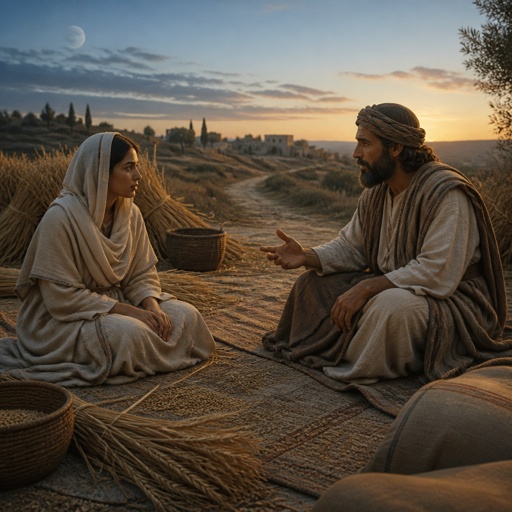
"And now it is true that I am thy near kinsman: howbeit there is a kinsman nearer than I." - Ruth 3:12

Ruth 4:12 - "And let thy house be like the house of Pharez, whom Tamar bare unto Judah, of the seed which the LORD shall give thee of this young woman."
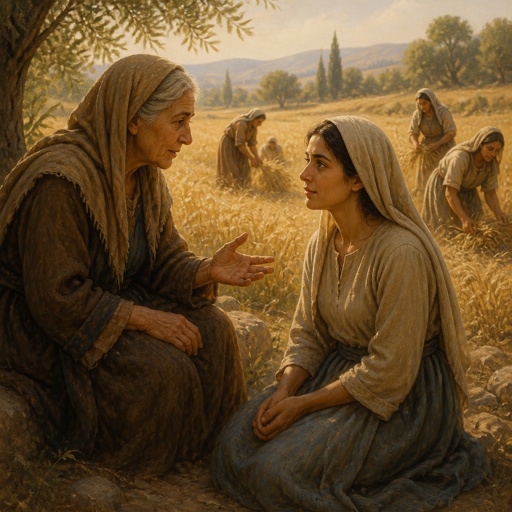
"And Naomi said unto Ruth her daughter in law, It is good, my daughter, that thou go out with his maidens, that they meet thee not in any other field." - Ruth 2:22
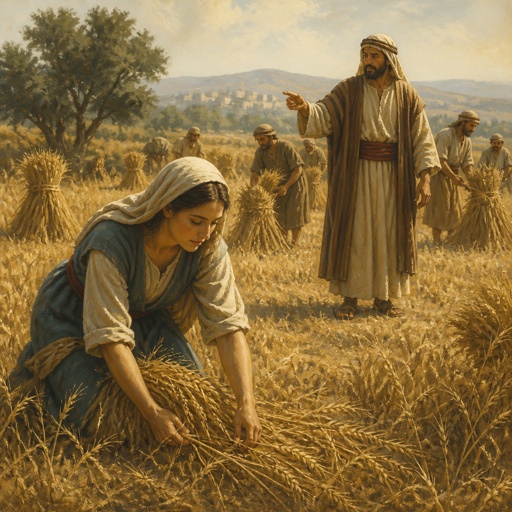
"And when she was risen up to glean, Boaz commanded his young men, saying, Let her glean even among the sheaves, and reproach her not:" - Ruth 2:15

Ruth 4:2 - "And he took ten men of the elders of the city, and said, Sit ye down here. And they sat down."

Ruth 2:1 - "And Naomi had a kinsman of her husband's, a mighty man of wealth, of the family of Elimelech; and his name was Boaz."

Ruth 2:6 - "And the servant that was set over the reapers answered and said, It is the Moabitish damsel that came back with Naomi out of the country of Moab:"

Ruth 3:2 - "And now is not Boaz of our kindred, with whose maidens thou wast? Behold, he winnoweth barley to night in the threshingfloor."

Ruth 2:17 - "So she gleaned in the field until even, and beat out that she had gleaned: and it was about an ephah of barley."

Ruth 2:16 - "And let fall also some of the handfuls of purpose for her, and leave them, that she may glean them, and rebuke her not."

Ruth 2:4 - "¶ And, behold, Boaz came from Beth-lehem, and said unto the reapers, The LORD be with you. And they answered him, The LORD bless thee."
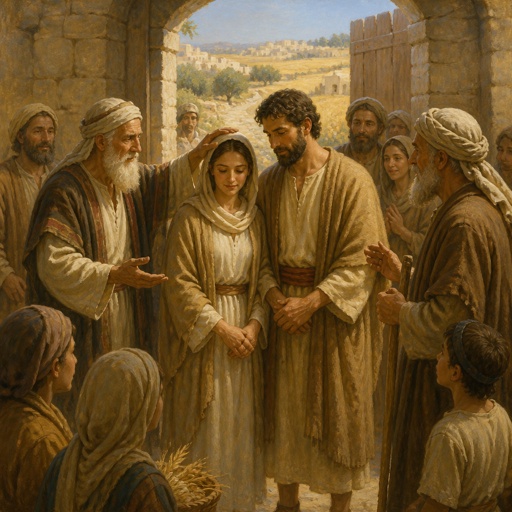
"And let thy house be like the house of Pharez, whom Tamar bare unto Judah, of the seed which the LORD shall give thee of this young woman." - Ruth 4:12

Ruth 2:23 - "So she kept fast by the maidens of Boaz to glean unto the end of barley harvest and of wheat harvest; and dwelt with her mother in law."

Ruth 2:3 - "And she went, and came, and gleaned in the field after the reapers: and her hap was to light on a part of the field belonging unto Boaz, who was of the kindred of Elimelech."
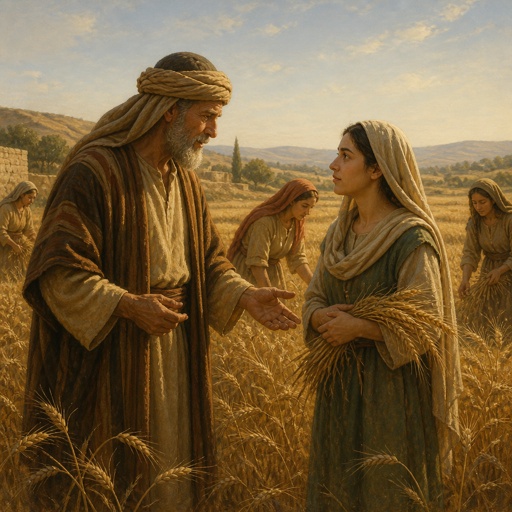
"Then said Boaz unto Ruth, Hearest thou not, my daughter? Go not to glean in another field, neither go from hence, but abide here fast by my maidens:" - Ruth 2:8
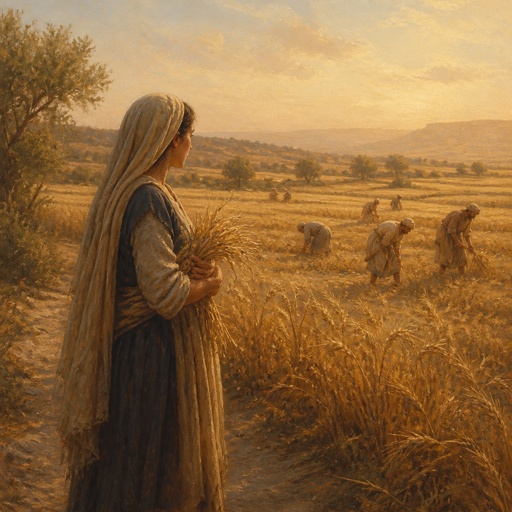
"And Ruth the Moabitess said, He said unto me also, Thou shalt keep fast by my young men, until they have ended all my harvest." - Ruth 2:21

Ruth 1:12 - "Turn again, my daughters, go your way; for I am too old to have an husband. If I should say, I have hope, if I should have an husband also to night, and should also bear sons;"
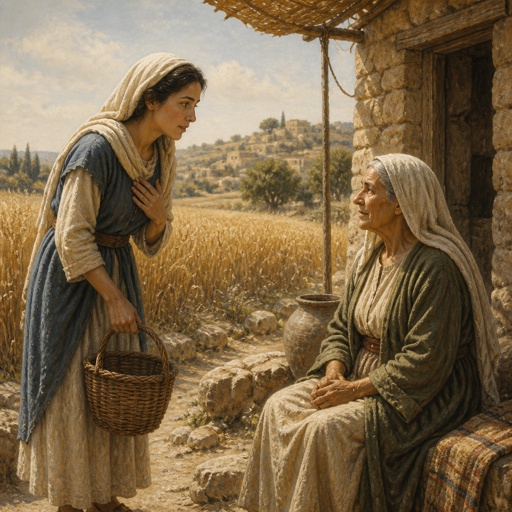
"And Ruth the Moabitess said unto Naomi, Let me now go to the field, and glean ears of corn after him in whose sight I shall find grace. And she said unto her, Go, my daughter." - Ruth 2:2

Ruth 1:2 - "And the name of the man was Elimelech, and the name of his wife Naomi, and the name of his two sons Mahlon and Chilion, Ephrathites of Beth-lehem-judah. And they came into the country of Moab, and continued there."