The Divine Garden: Understanding Our Roles in God’s Growth
“I have planted, Apollos watered; but God gave the increase. So then neither is he that planteth any thing, neither he that watereth; but God that giveth the increase.” — 1 Corinthians 3:6-7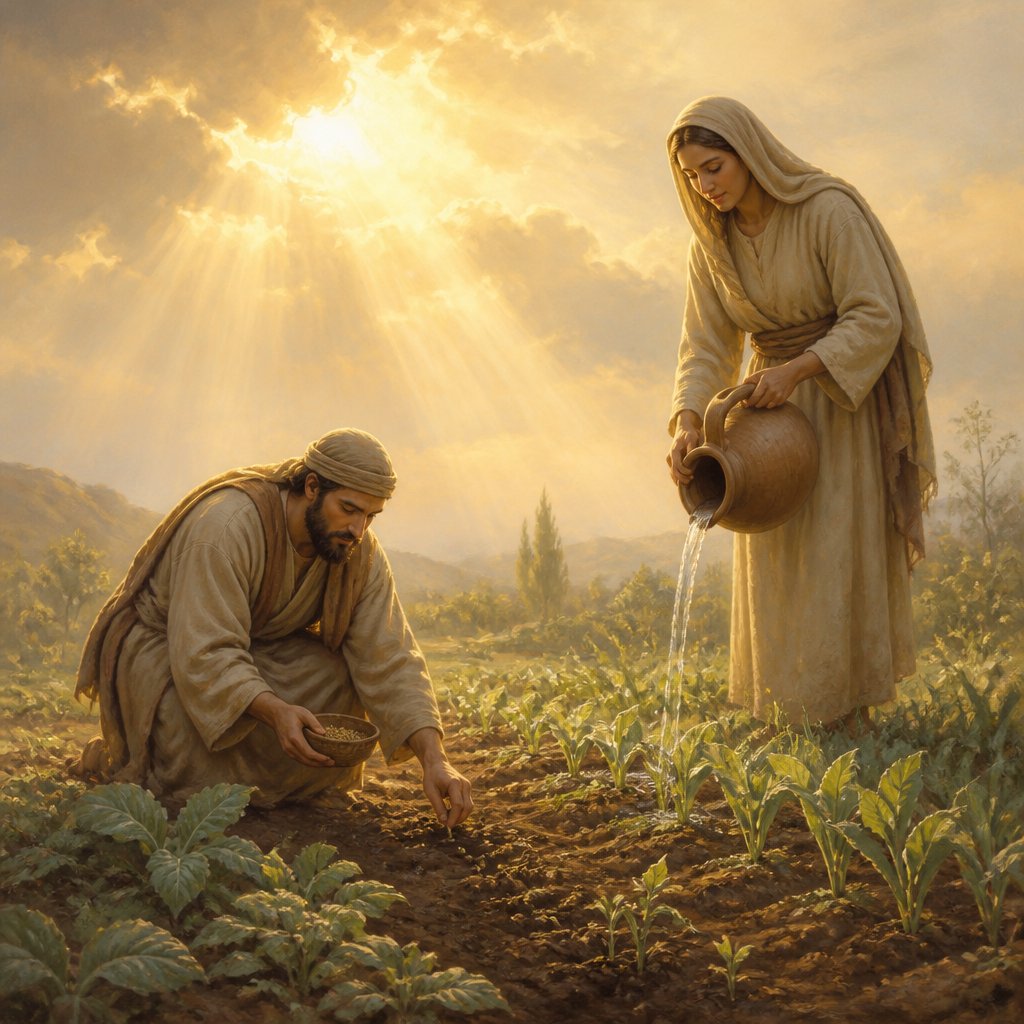
In the bustling world around us, we are often enticed to measure success through visible achievements—large corporations rising to power, social media influencers amassing millions of followers, or even ministries capturing thousands of souls. Yet, as Paul articulates in 1 Corinthians 3:6-7, there lies a profound truth about our pursuits as we engage in God’s work: “I have planted, Apollos watered; but God gave the increase.” (1 Corinthians 3:6, KJV) Moreover, Paul emphasizes, “So then neither is he that planteth anything, neither he that watereth; but God that giveth the increase.” (1 Corinthians 3:7, KJV) Here, Paul not only highlights the roles of planting and watering but also starkly directs our gaze toward the ultimate source of growth—God Himself.
### A Seed and Its Growth
When we think about gardening, the process begins with the humble act of planting a seed. It is an act filled with hope, mingled with uncertainty and patience. Once a gardener buries the seed in the soil, they do not immediately see the results. Days, sometimes weeks, pass, and the gardener has no direct influence over the seed’s development. This imagery mirrors our Christian work. We are called to spread the Gospel, plant seeds of truth in the hearts of others, and nurture them with love and the Word of God. Yet, the growth—transformation into fruitful lives—remains in the hands of God alone.
### Understanding Our Roles
In our service to God and each other, we may sometimes feel overshadowed by those who seem to have more influence or visibility. Paul was well aware of the divisions and comparisons that arose in the Corinthian church, alluding to the factions surrounding himself and Apollos. Each leader had unique gifts and roles, but Paul reminds the church that their contributions, while valuable, are not what sustains faith: it is God who brings about true spiritual growth.
When we share Christ’s love, encourage a brother, or genuinely pray for someone, we engage in the work of planting and watering. However, it is vital to understand that the effectiveness of our outreach does not rest on our abilities. Our actions are meaningful, but they are not the source of change. The profound reminder here is that our worth is not anchored in what we accomplish but in who we serve—the Almighty God who nurtures, cultivates, and brings things to fruition according to His divine will.
### A Call to Humility
These verses gently beckon us into a mindset of humility. In an age that celebrates self-made successes, Christians are called to pause and reflect on the involvement of God in the narrative of life and ministry. We must recognize that our gifts—be it preaching, teaching, or simply loving a neighbor—are tools provided by God for His purpose. Rather than seeking personal glory, our mission should cultivate a heart that craves God’s glory in all things.
It is a humbling realization: that despite our best efforts, we can never control the spiritual growth of another person. Frustration may arise when we do not witness immediate results from our labor. Yet through this passage, we learn to trust the process and rely on God’s timing. In our prayers, we acknowledge the growth we long to see is ultimately through His hand.
### A Prayer of Release
As we reflect on these thoughts, let us pray for the grace to fulfill our roles in the garden of faith with diligence, but also with a spirit of release. Join me in a prayer:
"Lord, thank You for allowing me to participate in Your handiwork. Help me to be faithful in planting and watering, yet teach me to lean into Your sovereignty over the increase. May I celebrate every small step of growth as Your handiwork. Keep me humble, and let my heart be attuned to Your glory, always acknowledging that it is not I who brings the increase, but You, O God, who causes growth in every life. Amen.”
As we fulfill our part in God’s mission, let us carry this truth with us: we do the planting and watering, but it is solely God who gives the increase.
Get our apps


Artwork for 1 Corinthians 3:6-7

1 Corinthians 3:6-7 - "I have planted, Apollos watered; but God gave the increase. So then neither is he that planteth anything, neither he that watereth; but God that giveth the increase."
"I have planted, Apollos watered; but God gave the increase. So then neither is he that planteth anything, neither he that watereth; but God that giveth the increase." - 1 Corinthians 3:6-7

1 Corinthians 3:6 - "I have planted, Apollos watered; but God gave the increase."
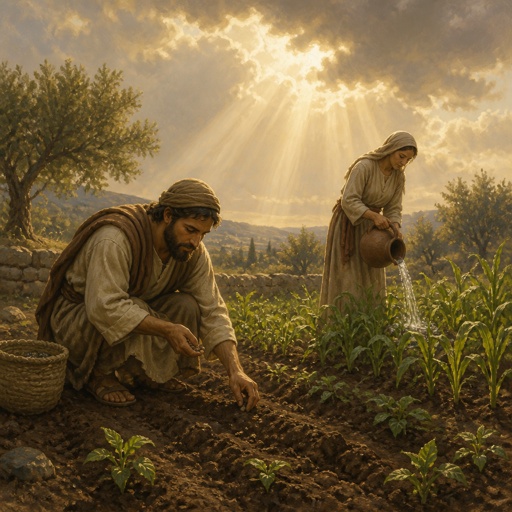
"I have planted, Apollos watered; but God gave the increase." - 1 Corinthians 3:6

1 Corinthians 7:6 - "But I speak this by permission, and not of commandment."

" Corinthians 3:6

2 Corinthians 3:6

2 Corinthians 3:6
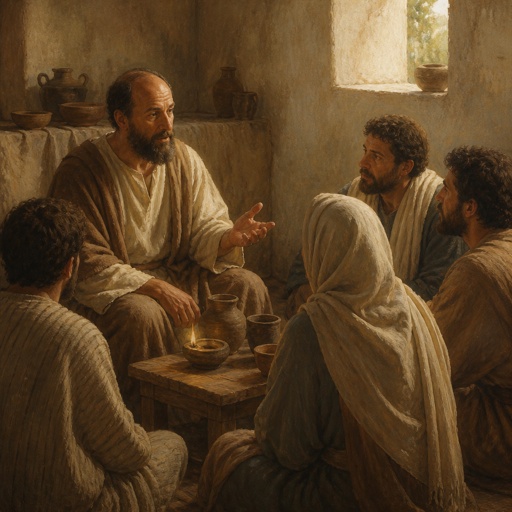
"But I speak this by permission, and not of commandment." - 1 Corinthians 7:6

1 Corinthians 6:3 - "Know ye not that we shall judge angels? how much more things that pertain to this life?"

1 Corinthians 7:3 - "Let the husband render unto the wife due benevolence: and likewise also the wife unto the husband."

1 Corinthians 3:7 - "So then neither is he that planteth any thing, neither he that watereth; but God that giveth the increase."

Acts 3:6-7

Acts 3:6-7

Acts 3:6-7

Acts 3:6-7

Acts 3:6-7

Corinthians 9:6-7

2 Thessalonians 3:6-7

1 Corinthians 3:16

1 Corinthians 3:16

2 Corinthians 6:3 - "Giving no offence in any thing, that the ministry be not blamed:"

1 corinthians 3:16-17

1 Corinthians 13:4-6

1 Corinthians 13:4-6

1 Corinthians 13:4-6

1 Corinthians 13:4-6

1 Corinthians 13:4-6

1 Corinthians 13:4-6

1 Corinthians 13:4-6