Guarding the Sanctity of God's House
“Who also hath gone about to profane the temple: whom we took, and would have judged according to our law.” — Acts 24:6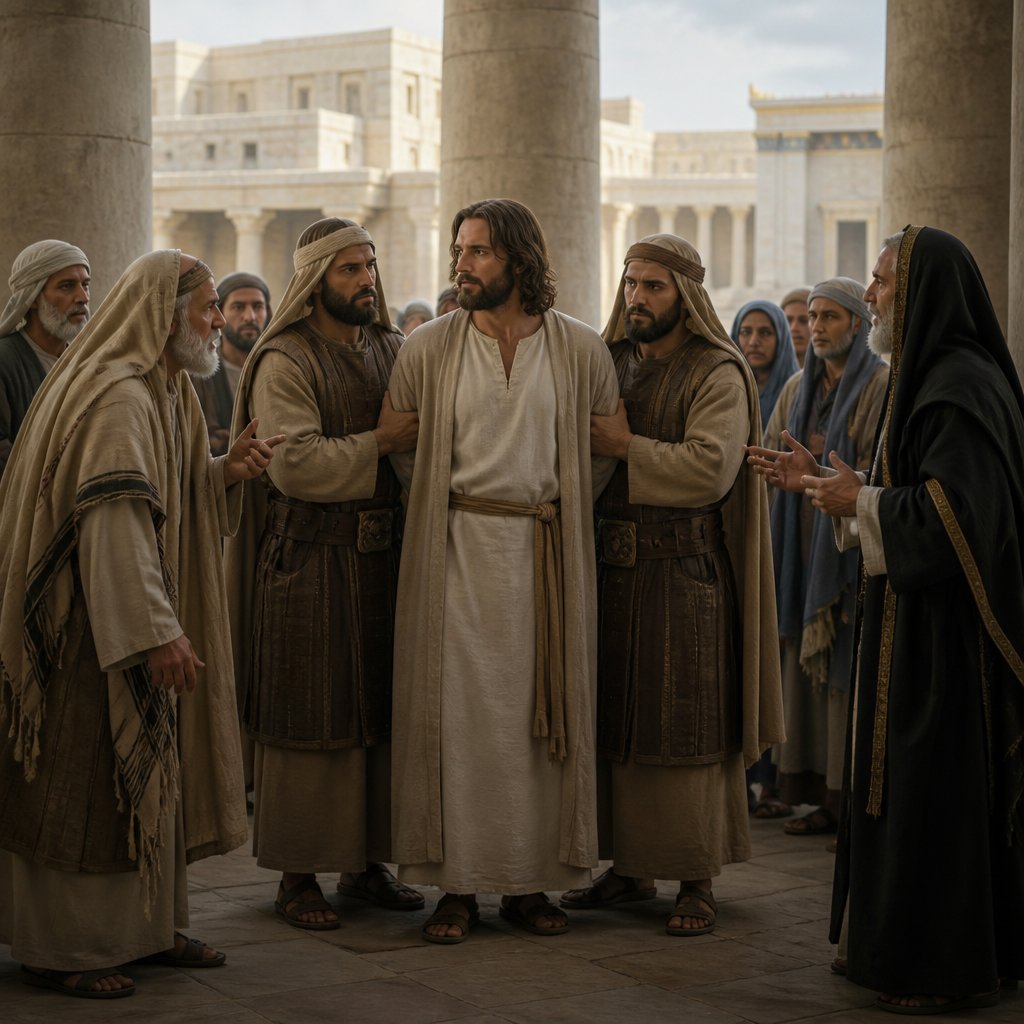
In Acts 24:6, we read: "Who also hath gone about to profane the temple: whom we took, and would have judged according to our law." This verse encapsulates a moment of tension, confrontation, and the seriousness of guarding the sanctity of God's dwelling place, which, in the context of this passage, refers to the Temple in Jerusalem.
The Temple is more than just a physical structure; it symbolizes God's presence among His people, a place for worship, sacrifice, and communion. In this verse, the phrase "to profane the temple" signifies an act of desecration that would directly contradict its sacred purpose. It prompts us to consider the implications of profaning what God has made holy, not only in a historical context but in our personal lives today.
The heart of the issue here is not merely about a physical space but rather points to an approach to God that reflects respect and reverence—or lack thereof. The accusation against Paul—that he would profane the temple—was a severe charge that could trigger dire consequences. To the Jewish leaders of the time, the Temple was the center of their faith and identity; to claim its desecration was to attack the very essence of their worship. This act was considered both a personal affront and a communal sin, threatening the covenant relationship between God and His people.
As we reflect on this passage, we must examine our own attitudes toward holiness and reverence. Just as the ancient Israelites had visible places of worship, we too have spaces where we gather to honor God—our churches and, indeed, our lives, which should serve as temples of the Holy Spirit (1 Corinthians 6:19). In what ways do we guard these spaces and our hearts against anything that would profane or undermine their sanctity?
The world is full of distractions, temptations, and pressures that can lead us away from a reverent posture toward God. Between societal norms that often trivialize spirituality and our own busy lives, we may inadvertently, or even knowingly, engage in behaviors that profane the sacred aspects of our faith. Therefore, we should challenge ourselves to cultivate environments—both physical and spiritual—that honor God.
The act of guarding God’s holiness in our lives requires intention. We are called to purify our hearts, to cast aside practices that do not align with God’s character, and to reaffirm the importance of living lives that are marked by righteousness. This can mean different things for each person: for some, it may involve stepping away from certain forms of entertainment that promote values contrary to the Gospel; for others, it might require setting boundaries in conversations that lead to gossip, division, or anger.
Moreover, we must also consider how we respond to charges made against our faith. Just as Paul found himself in a position to defend his beliefs amidst accusations, we too must be prepared to articulate our faith clearly and with grace. How do we stand firm when our personal Temple—the integrity of our beliefs and our communities—is challenged? We must ground ourselves in Scripture, rely on the power of the Holy Spirit, and point others back to the love and truth of Christ, who embodies all holiness and represents the ultimate fulfillment of the Temple.
In conclusion, Acts 24:6 challenges us to recognize the gravity of what it means to sanctify God’s temple. As stewards of our faith and defenders of the holy, let us commit ourselves to be diligent in preserving the integrity of His presence in our lives, our community, and our practices. May we always approach our relationship with God—with both fear and love, understanding the weight of what it means to dwell with Him and represent Him on Earth.
Get our apps


Artwork for Acts 24:6

Acts 24:6 - "Who also hath gone about to profane the temple: whom we took, and would have judged according to our law."
"Who also hath gone about to profane the temple: whom we took, and would have judged according to our law." - Acts 24:6

Acts 12:24 - "¶ But the word of God grew and multiplied."

Acts 24:9 - "And the Jews also assented, saying that these things were so."

Acts 3:6-7

Acts 3:6-7

Acts 14:24 - "And after they had passed throughout Pisidia, they came to Pamphylia."

Acts 3:6-7

Acts 3:6-7

Acts 3:6-7

Acts 24:13 - "Neither can they prove the things whereof they now accuse me."

Acts 28:24 - "And some believed the things which were spoken, and some believed not."

Acts 24:24 - "And after certain days, when Felix came with his wife Drusilla, which was a Jewess, he sent for Paul, and heard him concerning the faith in Christ."

"¶ But the word of God grew and multiplied." - Acts 12:24

Acts 6:6 - "Whom they set before the apostles: and when they had prayed, they laid their hands on them."

Acts 9:24 - "But their laying await was known of Saul. And they watched the gates day and night to kill him."

Acts 24:3 - "We accept it always, and in all places, most noble Felix, with all thankfulness."

Matthew 6:24

Matthew 6:24

Matthew 6:24

Acts 24:17 - "Now after many years I came to bring alms to my nation, and offerings."

Matthew 6:24

Genesis 24-6

Acts 21:5-6

Acts 23:24 - "And provide them beasts, that they may set Paul on, and bring him safe unto Felix the governor."

Acts 16:24 - "Who, having received such a charge, thrust them into the inner prison, and made their feet fast in the stocks."

Acts 11:24 - "For he was a good man, and full of the Holy Ghost and of faith: and much people was added unto the Lord."

Acts 24:19 - "Who ought to have been here before thee, and object, if they had ought against me."

Acts 18:24 - "¶ And a certain Jew named Apollos, born at Alexandria, an eloquent man, and mighty in the scriptures, came to Ephesus."

2 Kings 24:5 - "¶ Now the rest of the acts of Jehoiakim, and all that he did, are they not written in the book of the chronicles of the kings of Judah?"