Rulers and Judges: A Call to Reflection on Authority and Responsibility
“But he that did his neighbour wrong thrust him away, saying, Who made thee a ruler and a judge over us?” — Acts 7:27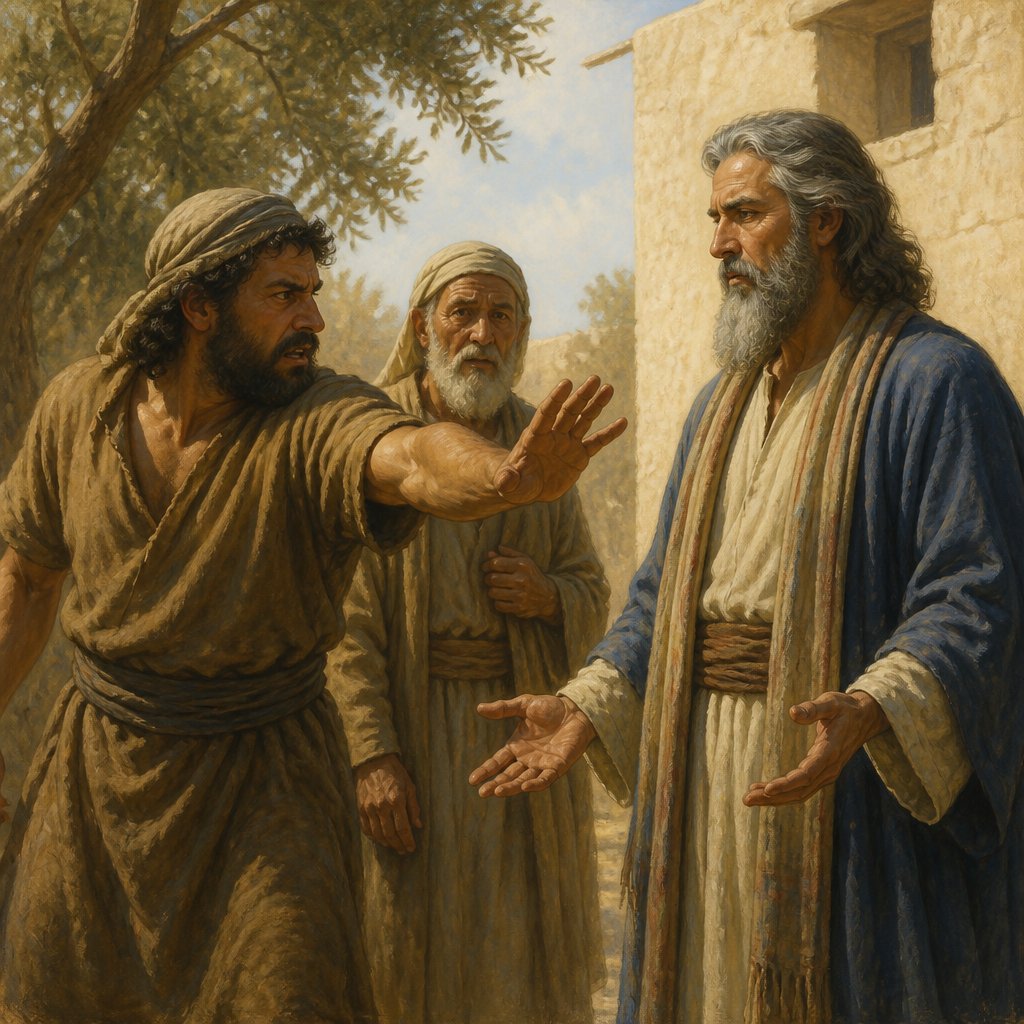
The verse Acts 7:27 states, “But he that did his neighbour wrong thrust him away, saying, Who made thee a ruler and a judge over us?” This verse occurs in the narrative of Stephen before the Sanhedrin, serving as a poignant reminder of the complexities of authority, judgment, and our responsibilities in relationships with one another.
As we delve into the context of this scripture, we find ourselves reflecting on the life of Moses, who killed an Egyptian while defending a Hebrew slave. This act was an expression of righteous anger, yet it was also a premature assertion of his role in delivering the Israelites from bondage. In the aftermath of this act, Moses was confronted by one of his own people, who questioned his authority and purpose. "Who made thee a ruler and a judge over us?" was not just a retort; it was a profound inquiry into Moses’s identity and his timing in taking action. It insinuates a challenge to his assumed leadership.
This narrative thrusts us into the heart of our human condition—how often do we challenge the roles of those in authority? How often do we feel compelled to question someone who presumes to lead us? This skepticism is embedded in our human interactions. It reflects a deep-seated concern about who is worthy of authority and how this power is executed. The question becomes not just a jab at Moses, but a mirror that we should hold to ourselves regarding our treatment of leaders and our understanding of authority.
Consider how this reflects in our daily lives. Each of us holds various roles—parents, teachers, employers, and friends. We often assume leadership in these arenas without the explicit endorsement or recognition of our peers. How do we navigate the delicate tension between being a guide and being perceived as a dictator? Are we open to the feedback that challenges our perceived authority?
The term “ruler” signifies someone who associates with governance and leadership, while “judge” relates to discernment and fairness. As followers of Christ, we are called to reflect these qualities in our interactions. The trepidation highlighted in Acts 7:27 serves as a powerful call to develop a spirit of servanthood rather than a spirit of authoritarianism. True leadership comes from the humility of heart and the willingness to listen and learn from those we lead.
In our spiritual journey, we often feel the need to assert our beliefs, our roles in ministry, or even our wisdom in scriptural matters with an air of supremacy. We risk alienating ourselves from those who long for an approachable leader. Jesus exemplified this perfectly, as he washed the feet of his disciples, demonstrating that true authority is found in service, not domination. As we meditate on Acts 7:27, let us examine how we treat our neighbors and what assumptions we make about their worthiness to lead or speak.
Furthermore, this verse encourages us to consider how we respond when our own authority is challenged. Instead of reacting defensively, perhaps we should view these challenges as opportunities for growth and self-assessment. It becomes critical to listen, understand, and perhaps reshape our approaches to leadership and mentoring. The strength of a character is often revealed in moments of adversity when questions are posed by those we lead and serve.
Ultimately, Acts 7:27 invites us to cultivate a posture of humility and grace both in our exercise of authority and in how we honor those in leadership around us. Just like Moses faced doubts about his leadership, we, too, may face resistance and skepticism. If we lead with compassion and a servant’s heart, we can earn the trust and respect of those we serve. Let us seek God's guidance in the ways we influence others, ensuring that our actions reflect not self-serving authority but rather divine leadership.
Get our apps


Artwork for Acts 7:27

Acts 7:27 - "But he that did his neighbour wrong thrust him away, saying, Who made thee a ruler and a judge over us?"
"But he that did his neighbour wrong thrust him away, saying, Who made thee a ruler and a judge over us?" - Acts 7:27

2 Chronicles 27:7 - "¶ Now the rest of the acts of Jotham, and all his wars, and his ways, lo, they are written in the book of the kings of Israel and Judah."

Acts 27:7 - "And when we had sailed slowly many days, and scarce were come over against Cnidus, the wind not suffering us, we sailed under Crete, over against Salmone;"

Acts 17:27

Acts 27:26 - "Howbeit we must be cast upon a certain island."

Acts 27:27 - "But when the fourteenth night was come, as we were driven up and down in Adria, about midnight the shipmen deemed that they drew near to some country;"

"¶ Now the rest of the acts of Jotham, and all his wars, and his ways, lo, they are written in the book of the kings of Israel and Judah." - 2 Chronicles 27:7

Acts 11:27 - "¶ And in these days came prophets from Jerusalem unto Antioch."

Acts 27:36 - "Then were they all of good cheer, and they also took some meat."

Acts 27:14 - "But not long after there arose against it a tempestuous wind, called Euroclydon."

Acts 27:32 - "Then the soldiers cut off the ropes of the boat, and let her fall off."

Acts 27:18 - "And we being exceedingly tossed with a tempest, the next day they lightened the ship;"

Acts 27:37 - "And we were in all in the ship two hundred threescore and sixteen souls."

Acts 20:27 - "For I have not shunned to declare unto you all the counsel of God."

Acts 26:27 - "King Agrippa, believest thou the prophets? I know that thou believest."

Acts 3:6-7

Acts 3:6-7

Acts 3:6-7

Acts 3:6-7

Acts 3:6-7

Acts 27:38 - "And when they had eaten enough, they lightened the ship, and cast out the wheat into the sea."

Acts 27:19 - "And the third day we cast out with our own hands the tackling of the ship."
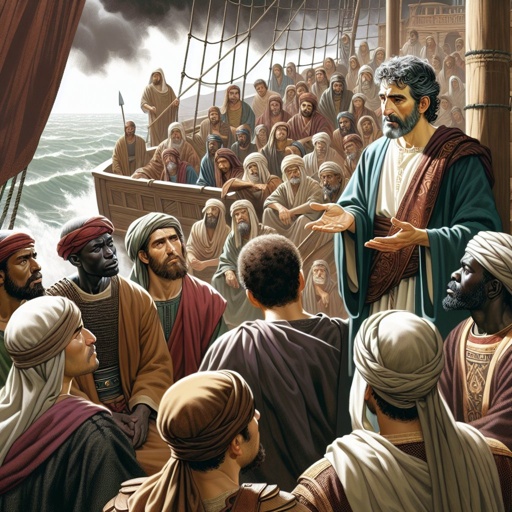
Acts 27:31 - "Paul said to the centurion and to the soldiers, Except these abide in the ship, ye cannot be saved."

Acts 10:27 - "And as he talked with him, he went in, and found many that were come together."

Acts 27:6 - "And there the centurion found a ship of Alexandria sailing into Italy; and he put us therein."

Acts 27:23 - "For there stood by me this night the angel of God, whose I am, and whom I serve,"

Acts 27:42 - "And the soldiers' counsel was to kill the prisoners, lest any of them should swim out, and escape."

Acts 25:27 - "For it seemeth to me unreasonable to send a prisoner, and not withal to signify the crimes laid against him."

Acts 27:25 - "Wherefore, sirs, be of good cheer: for I believe God, that it shall be even as it was told me."