The Challenge of Human Solutions: Trusting God in Times of Trial
“But Abram said unto Sarai, Behold, thy maid is in thy hand; do to her as it pleaseth thee. And when Sarai dealt hardly with her, she fled from her face.” — Genesis 16:6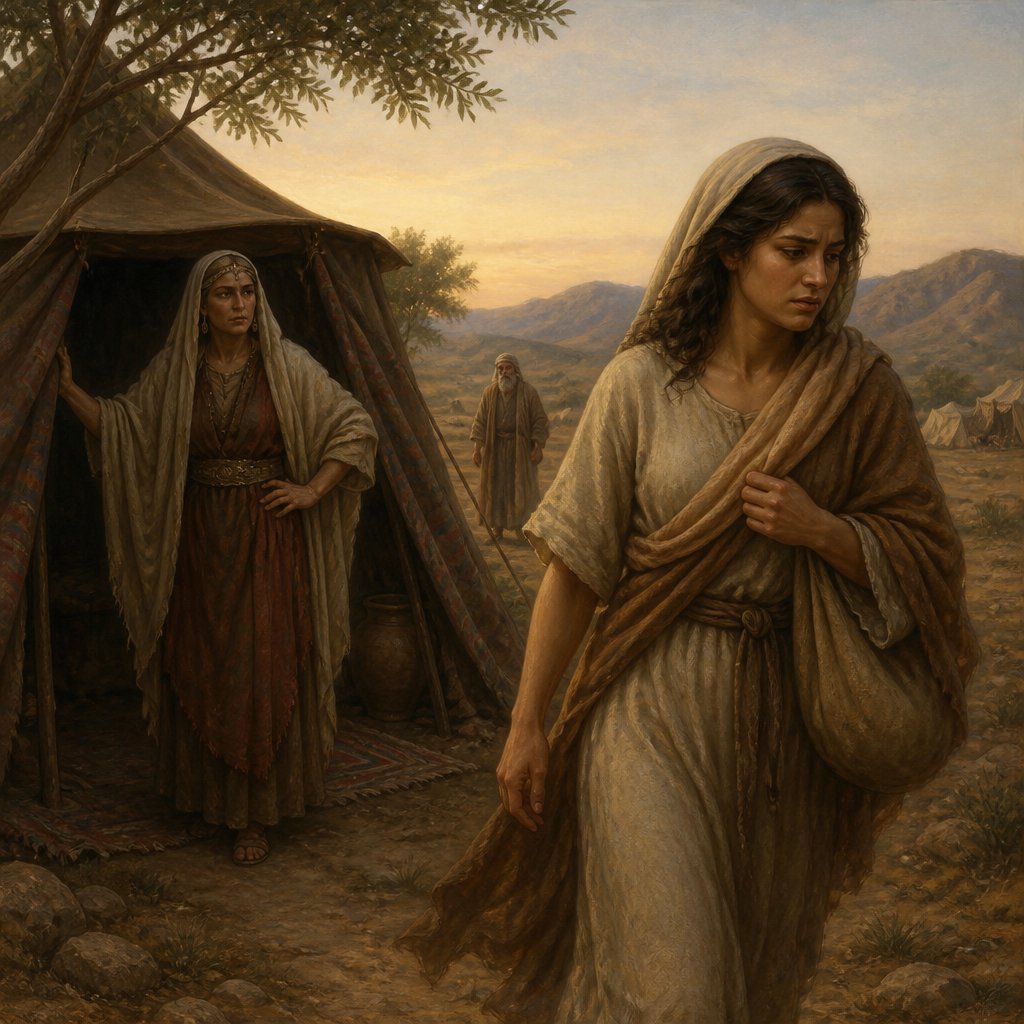
Genesis 16:6 (KJV) presents a moment of tension and human frailty in the lives of Abram and Sarai: "But Abram said unto Sarai, Behold, thy maid is in thy hand; do to her as it pleaseth thee. And when Sarai dealt hardly with her, she fled from her face." This passage offers profound insights into the themes of trust, impatience, and the consequences of our actions when we seek to achieve God's promises through human means.
**Context and Background**
Abram and Sarai had received a promise from God that they would have descendants as numerous as the stars, but as they found themselves growing older and the years passed without the arrival of the promised child, doubt began to creep in. It was a common struggle—waiting on God’s timing can often feel like an unending task. Sarai, in her desperation, devised her own plan, believing that she could help God fulfill His promise by giving Abram her maid, Hagar, so that they might have a child through her.
This raises an important question we must contemplate in our own lives: How often do we attempt to take matters into our own hands when we feel that God is delaying His promises? Sarai's decision reflects a lack of patience and trust in divine timing, as well as an inclination to manipulate her circumstances to serve her understanding of God's plan.
**Reflecting on Actions and Consequences**
Abram’s passive response is also striking. He essentially relinquishes responsibility, telling Sarai to do what she pleases with Hagar. While it is true that Sarai had the authority over her servant, Abram's failure to stand in the gap and advocate for Hagar speaks volumes of a deeper issue in their relationship and their faith journey.
When Sarai mistreats Hagar, the consequences are immediate and devastating. Hagar, feeling oppressed and unloved, flees into the wilderness—a stark visualization of the emotional and spiritual turmoil that can arise when we prioritize human solutions over faith in God. Herein lies a pivotal lesson: decisions made without consulting God or seeking His guidance can lead to hurt feelings, broken relationships, and the fleeing of those caught in the middle.
**Lessons on Trust and Waiting**
As believers, we are called to exercise faith and trust in God, especially when His promises seem delayed. Instead of taking matters into our hands, we should learn to wait on Him, knowing that His plans are ultimately for our good. The waiting period is not a period of inactivity, but rather a time of growth, refinement, and deeper intimacy with the Lord.
Instead of viewing waiting as a burden, we must embrace it as an opportunity to strengthen our faith. Every moment of waiting can be transformed into a moment of prayer, reflection, and reliance on God. When we contemplate the waiting periods in our lives, let us remember that God does not waste any season. Each trial, each challenge, is purposeful.
**God's Sovereignty and Ongoing Story**
Finally, it’s important to recognize that even in our missteps, God’s sovereignty remains intact. The narrative does not end with Hagar fleeing or with Sarai’s failures; instead, it continues to unfold, revealing how God intervenes. He sees Hagar in her distress and sends an angel to comfort her, which demonstrates God's faithfulness even when we sin or fall short.
Abram and Sarai’s story ultimately leads to the birth of Isaac, God’s miraculous provision through which the covenant is fulfilled. Similarly, when we place our trust in God and learn from our trials, we position ourselves to witness His redemptive work.
**Conclusion**
As we meditate on Genesis 16:6, let us be reminded to surrender our fears and uncertainties to God. May we endeavor to trust His timing, remain steadfast in our faith, and avoid the pitfalls of human solutions. Trusting God requires patience but yields a harvest of peace and fulfillment that we could never manufacture on our own. In the waiting, let us draw closer to Him, knowing that He is not just the author of our promises but also the perfecter of our faith.
Get our apps


Artwork for Genesis 16:6

Genesis 16:6

Genesis 16:6 - "But Abram said unto Sarai, Behold, thy maid is in thy hand; do to her as it pleaseth thee. And when Sarai dealt hardly with her, she fled from her face."
"But Abram said unto Sarai, Behold, thy maid is in thy hand; do to her as it pleaseth thee. And when Sarai dealt hardly with her, she fled from her face." - Genesis 16:6

Genesis 16:16

Genesis 6:16 - "A window shalt thou make to the ark, and in a cubit shalt thou finish it above; and the door of the ark shalt thou set in the side thereof; with lower, second, and third stories shalt thou make it."

Genesis 16:3

Genesis 16:14

Genesis 16:2

Genesis 1:16

Genesis 15:16

Genesis 16:1

Genesis 18-16

Genesis 25-16

Genesis 16:8

Genesis 16:12

Genesis 17-16

Genesis 3:16

Genesis 16:11

Genesis 16:4

Genesis 16:7

Genesis 20-16

Genesis 28-16

Genesis 16:5

Genesis 16:9

Genesis 23-16

Genesis 22-16

Genesis 16:15

Genesis 16:3

Genesis 24-16

Genesis 19-16