What does Genesis 16:6 mean?
“But Abram said unto Sarai, Behold, thy maid is in thy hand; do to her as it pleaseth thee. And when Sarai dealt hardly with her, she fled from her face.” — Genesis 16:6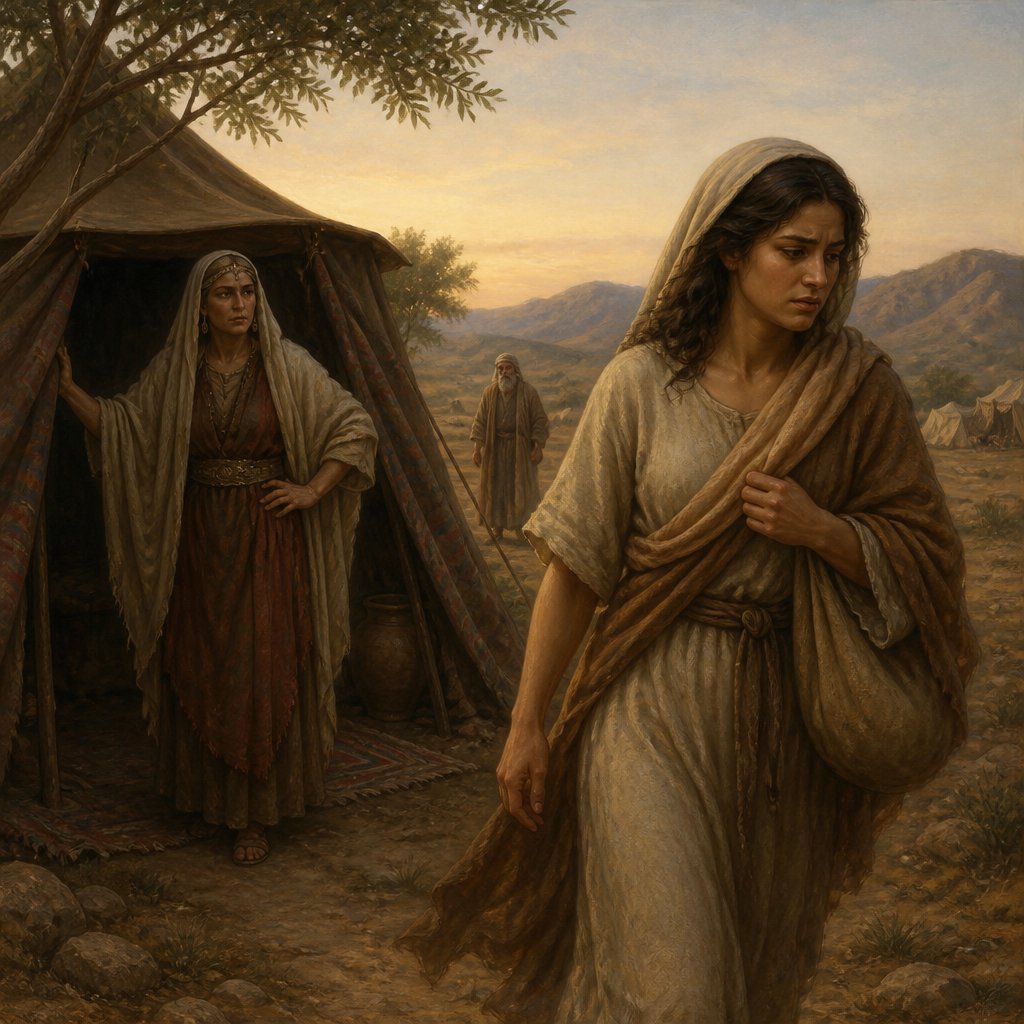
Genesis 16:6 in the King James Version reads: "But Abram said unto Sarai, Behold, thy maid is in thy hand; do to her as it pleaseth thee. And when Sarai dealt hardly with her, she fled from her face."
This verse comes from the story of Abram, later known as Abraham, and his wife Sarai, later known as Sarah. The couple had been promised by God that they would have a child and become the father and mother of a great nation. However, as time passed and Sarai remained childless, she became impatient and decided to take matters into her own hands.
In Genesis 16, Sarai suggests to Abram that he take her Egyptian maidservant, Hagar, as a wife so that they may have a child through her. Abram agrees to this and takes Hagar as his wife. The verse in question occurs after Hagar conceives and tensions rise between her and Sarai. Sarai begins to deal harshly with Hagar, and in response, Hagar flees from her presence.
This verse is rich with symbolism, themes, and important context that contribute to the larger narrative of the Bible. The themes of faith, impatience, and the consequences of human intervention in God's plans are all present in this verse.
One of the key themes in this passage is the theme of faith. Both Sarai and Abram struggle with their faith in God's promise to make them the parents of a great nation. When Sarai suggests that Abram take Hagar as his wife, it is an act of doubt and impatience. Instead of trusting in God's timing and plan, she tries to take matters into her own hands. This theme of faith is prevalent throughout the Bible, as characters are constantly called to trust in God's promises, even when they seem impossible.
The verse also speaks to the theme of the consequences of human intervention in God's plans. By taking Hagar as his wife, Abram and Sarai are trying to fulfill God's promise on their own terms. This intervention leads to conflict and hardship, as Hagar flees from Sarai's mistreatment. This theme of human intervention and its consequences is a recurring one in the Bible, as it is often shown that when individuals try to take control of their own destinies, they ultimately bring about more harm than good.
In the larger context of the Bible, this verse is just one part of the larger narrative of God's promise to Abram and Sarai. It serves as a reminder of the challenges and consequences that come with trying to fulfill God's promises in our own way. It also sets the stage for the birth of Ishmael, the son of Hagar and Abram, and the ensuing conflicts between Ishmael's descendants and the descendants of Isaac, the child ultimately born to Sarai and Abram as a result of God's intervention.
Symbolically, this verse can also be seen as a representation of the tension and conflict that arise when individuals seek to take control of their own destinies. It serves as a cautionary tale about the dangers of impatience, doubt, and disobedience to God's will.
In conclusion, Genesis 16:6 in the King James Version is a significant verse within the larger narrative of God's promise to Abram and Sarai. It speaks to important themes such as faith, human intervention in God's plans, and the consequences of such actions. It serves as a cautionary tale and a reminder of the importance of trusting in God's timing and plan, even when it seems difficult to do so.
Get our apps


Artwork for Genesis 16:6

Genesis 16:6

Genesis 16:6 - "But Abram said unto Sarai, Behold, thy maid is in thy hand; do to her as it pleaseth thee. And when Sarai dealt hardly with her, she fled from her face."
"But Abram said unto Sarai, Behold, thy maid is in thy hand; do to her as it pleaseth thee. And when Sarai dealt hardly with her, she fled from her face." - Genesis 16:6

Genesis 16:16

Genesis 6:16 - "A window shalt thou make to the ark, and in a cubit shalt thou finish it above; and the door of the ark shalt thou set in the side thereof; with lower, second, and third stories shalt thou make it."

Genesis 16:3

Genesis 16:14

Genesis 16:2

Genesis 1:16

Genesis 15:16

Genesis 16:1

Genesis 18-16

Genesis 25-16

Genesis 16:8

Genesis 16:12

Genesis 17-16

Genesis 3:16

Genesis 16:11

Genesis 16:4

Genesis 16:7

Genesis 20-16

Genesis 28-16

Genesis 16:5

Genesis 16:9

Genesis 23-16

Genesis 22-16

Genesis 16:15

Genesis 16:3

Genesis 24-16

Genesis 19-16