Chosen by the Lord: The Legacy of Abraham
“Thou art the LORD the God, who didst choose Abram, and broughtest him forth out of Ur of the Chaldees, and gavest him the name of Abraham;” — Nehemiah 9:7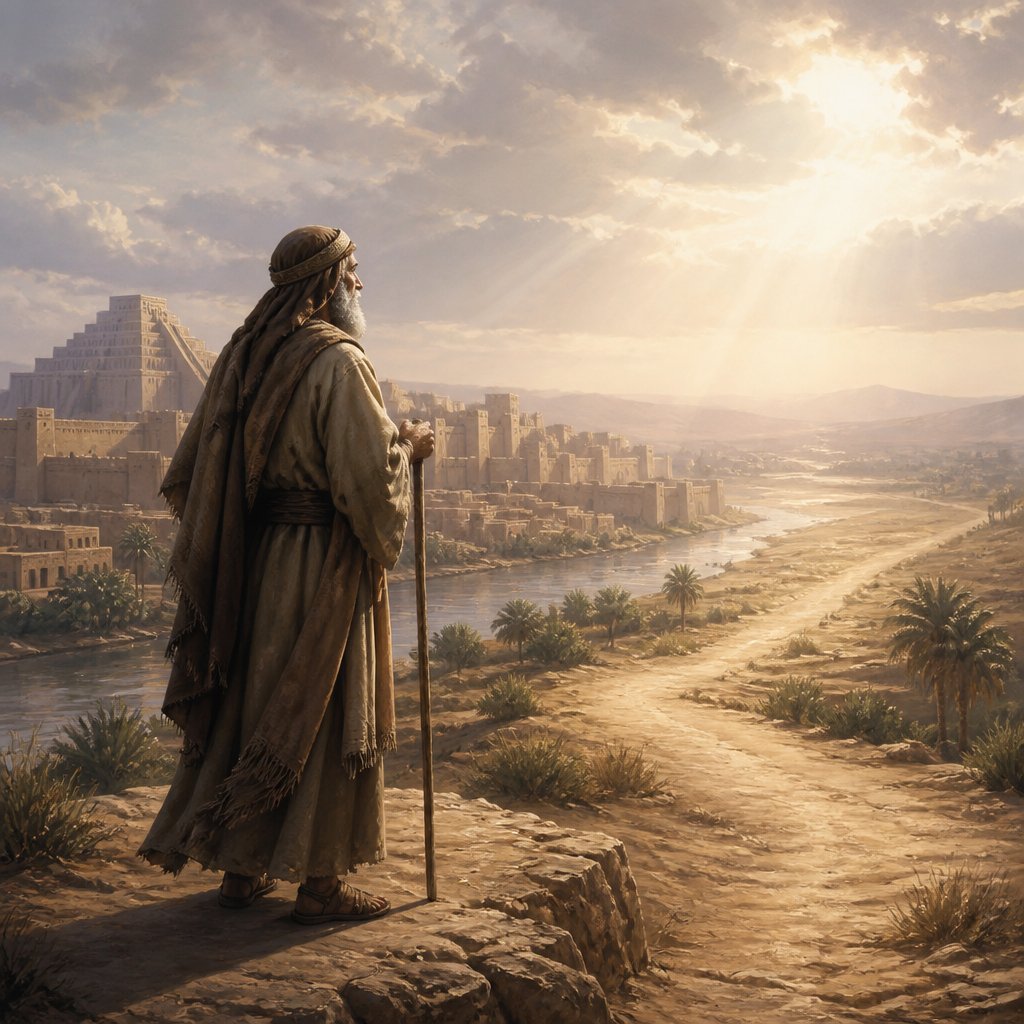
As we delve into Nehemiah 9:7, we find a profound reminder of God's sovereignty and His divine choice: "Thou art the LORD the God, who didst choose Abram, and broughtest him forth out of Ur of the Chaldees, and gavest him the name of Abraham;" (KJV). This verse encapsulates a story of hope and destiny that echoes through the ages—a story that still speaks to us today.
To understand the significance of this verse, we must first grasp who Abram was and the context of his calling. Abram, a man from Ur of the Chaldees, lived in a prosperous city filled with idolatry and pagan worship. His life was initially rooted in a culture far removed from God, filled with distraction and sin. Yet, God chose him, not because of his works or his status, but purely by His grace. This choice reminds us that God sees beyond our backgrounds, past our failures, and looks into the heart.
God's calling of Abram serves as a powerful illustration of how our past does not determine our future. Just as God called Abram out of a world of idolatry, He calls each of us from our own darkness and separation. This calling lent Abraham a new identity: the father of many nations. The name Abraham signifies not just a changed title, but a transformed life—a life that would influence generations. God did not simply bring him out; He had a purpose, a covenant that would span across time.
When God chooses, He equips. The name Abraham is also a reminder that God empowers His chosen for His mission. He gave him promises that were both national and personal—the promise of land, descendants, and blessing. In Genesis 12:2, God speaks, saying, "And I will make of thee a great nation, and I will bless thee, and make thy name great; and thou shalt be a blessing." These words resonate with the idea that God does not bless us merely for our own sake but that we might be a blessing to others.
In Nehemiah 9:7, the recounting of the free will choice of God to bring forth Abraham illustrates God’s initiative in salvation history. It lays the foundation for a narrative that weaves through the fabric of Scripture, revealing His faithfulness to His covenant. It shows how, through the lineage of Abraham, all nations would be blessed, leading ultimately to the coming of Jesus Christ. Christ, the fulfillment of God’s promise to Abraham, offers us that same opportunity to respond to God’s gracious choice.
Today, we often face uncertainties about our paths and futures, much like Abraham did when he was called to leave his home and venture into the unknown. However, Nehemiah 9:7 reassures us that God knows where He is leading us. In our walk with God, we are not just aimless wanderers. We are chosen and called into a divine purpose, with God orchestrating the very details of our lives.
As we reflect on this verse, we should ask ourselves: How do we respond to God’s choice in our lives? Are we willing to step out in faith, like Abraham, trusting that God has a plan for us? Are we ready to leave our ‘Ur of the Chaldees,’ stepping away from the known comforts of our lives, and into God’s promise?
In our generation, the challenge remains to recognize God’s call and act upon it. Let us remember that as we are chosen, we are challenged to live lives that reflect God’s glory. We carry the legacy of Abraham in us, representing faith, obedience, and commitment to a God who gives us identity and purpose. May our lives echo the faithfulness of our forefather Abraham as we seek to fulfill the calling placed upon us, not just for our benefit, but for the blessing of those around us.
Get our apps


Artwork for Nehemiah 9:7

Nehemiah 9:7 - "Thou art the LORD the God, who didst choose Abram, and broughtest him forth out of Ur of the Chaldees, and gavest him the name of Abraham;"
"Thou art the LORD the God, who didst choose Abram, and broughtest him forth out of Ur of the Chaldees, and gavest him the name of Abraham;" - Nehemiah 9:7

Nehemiah 7:9 - "The children of Shephatiah, three hundred seventy and two."

"The children of Shephatiah, three hundred seventy and two." - Nehemiah 7:9

Nehemiah 7:7 - "Who came with Zerubbabel, Jeshua, Nehemiah, Azariah, Raamiah, Nahamani, Mordecai, Bilshan, Mispereth, Bigvai, Nehum, Baanah. The number, I say, of the men of the people of Israel was this;"

Nehemiah 6:9

Nehemiah 9:9 - "And didst see the affliction of our fathers in Egypt, and heardest their cry by the Red sea;"

Nehemiah 10:7 - "Meshullam, Abijah, Mijamin,"

Nehemiah 7:42 - "The children of Harim, a thousand and seventeen."

Nehemiah 7:24 - "The children of Hariph, an hundred and twelve."

Nehemiah 7:56 - "The children of Neziah, the children of Hatipha."

Nehemiah 7:25 - "The children of Gibeon, ninety and five."

Nehemiah 7:40 - "The children of Immer, a thousand fifty and two."

Nehemiah 7:31 - "The men of Michmas, an hundred and twenty and two."

Nehemiah 7:33 - "The men of the other Nebo, fifty and two."

Nehemiah 7:21 - "The children of Ater of Hezekiah, ninety and eight."

Nehemiah 7:28 - "The men of Beth-azmaveth, forty and two."

Nehemiah 7:14 - "The children of Zaccai, seven hundred and threescore."

Nehemiah 7:27 - "The men of Anathoth, an hundred twenty and eight."

Nehemiah 7:35 - "The children of Harim, three hundred and twenty."

Nehemiah 7:16 - "The children of Bebai, six hundred twenty and eight."

Nehemiah 7:58 - "The children of Jaala, the children of Darkon, the children of Giddel,"

Nehemiah 7:48 - "The children of Lebana, the children of Hagaba, the children of Shalmai,"

Nehemiah 7:19 - "The children of Bigvai, two thousand threescore and seven."

Nehemiah 7:15 - "The children of Binnui, six hundred forty and eight."

Nehemiah 7:44 - "¶ The singers: the children of Asaph, an hundred forty and eight."

Nehemiah 7:18 - "The children of Adonikam, six hundred threescore and seven."

Nehemiah 7:13 - "The children of Zattu, eight hundred forty and five."

Nehemiah 7:49 - "The children of Hanan, the children of Giddel, the children of Gahar,"

Nehemiah 7:55 - "The children of Barkos, the children of Sisera, the children of Tamah,"