What does Acts 17:3 mean?
“Opening and alleging, that Christ must needs have suffered, and risen again from the dead; and that this Jesus, whom I preach unto you, is Christ.” — Acts 17:3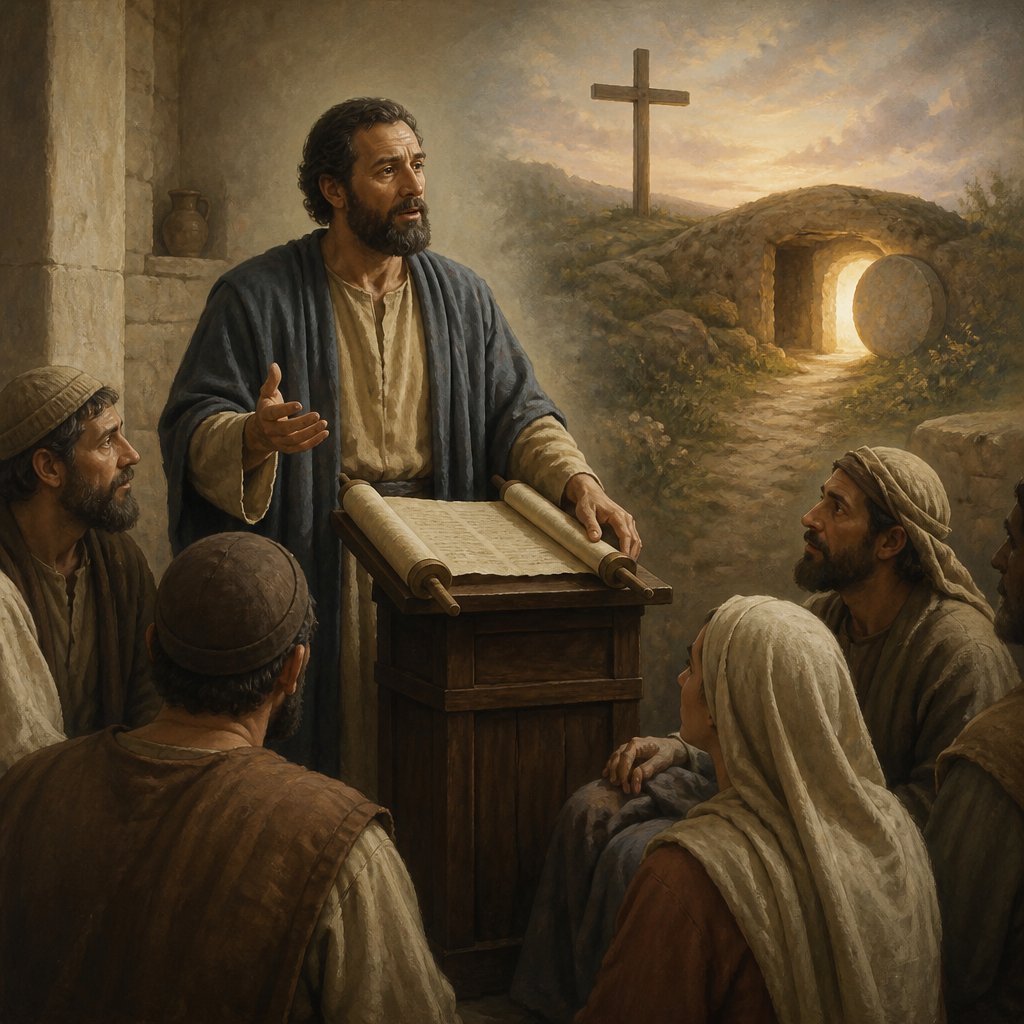
Acts 17:3 in the King James Version (KJV) of the Bible reads: "Opening and alleging, that Christ must needs have suffered, and risen again from the dead; and that this Jesus, whom I preach unto you, is Christ."
This verse is taken from the book of Acts, which is the fifth book of the New Testament. It is believed to have been written by Luke, the same author of the Gospel of Luke. The book of Acts chronicles the early days of the Christian church, focusing primarily on the actions and teachings of the apostles, particularly the journey of Paul. The verse in question is a part of Paul's ministry in the city of Thessalonica.
The verse begins with the words "Opening and alleging," which indicates that Paul was presenting an argument or reasoning to the people he was speaking to. He was using both reason and evidence to persuade his audience of the truth of his message. This serves as a model for how believers are to approach sharing the Gospel with others. Paul's approach was not coercion or force, but rather a presentation of the facts and an appeal to reason.
The content of Paul's argument is centered on the suffering, death, and resurrection of Christ. He asserts that Christ's suffering and resurrection were necessary, fulfilling Old Testament prophecies and providing atonement for the sins of humanity. This aligns with the central tenets of Christian faith, emphasizing the redemptive work of Christ on the cross and his victory over death.
In addition to presenting the necessity of Christ's suffering and resurrection, Paul also proclaims that Jesus is the Christ, the long-awaited Messiah. This declaration holds great significance, as it signifies the fulfillment of God's promise to send a savior to redeem His people. By identifying Jesus as the Christ, Paul is affirming his divinity and his role as the fulfillment of God's plan for salvation.
The verse is also significant in promoting the idea of fulfillment of Old Testament prophecies. Throughout the New Testament, there are numerous references to Old Testament prophecies being fulfilled in the life, death, and resurrection of Jesus Christ. This concept serves to connect the Old Testament with the New Testament, demonstrating the continuity and coherence of God's redemptive plan throughout history.
Symbolism can also be found in this verse. Christ's suffering and resurrection symbolize the sacrificial love of God and the victory over sin and death. The proclamation of Jesus as the Christ symbolizes the fulfillment of God's promise and the establishment of a new covenant between God and humanity. The act of presenting an argument to a skeptical audience symbolizes the call for Christians to engage in dialogue and persuasion, rather than coercion, in sharing the message of the Gospel.
The broader theme of the verse revolves around the proclamation of the Gospel and the fulfillment of God's plan for salvation. It emphasizes the centrality of Christ's suffering, death, and resurrection in the Christian faith, as well as the importance of presenting the truth of the Gospel with clarity, reason, and persuasion. It also highlights the connection between the Old Testament prophecies and their fulfillment in the person of Jesus Christ.
In conclusion, Acts 17:3 in the King James Version of the Bible conveys a profound message about the redemptive work of Jesus Christ, the fulfillment of Old Testament prophecies, and the call for reasoned proclamation of the Gospel. It is a foundational verse that encapsulates essential aspects of the Christian faith and provides valuable insights into the early Christian ministry. The verse serves as a reminder of the significance of Christ's sacrifice and resurrection, as well as the call for believers to confidently and persuasively share the message of salvation with the world.
Get our apps


Artwork for Acts 17:3

Acts 17:3 - "Opening and alleging, that Christ must needs have suffered, and risen again from the dead; and that this Jesus, whom I preach unto you, is Christ." respectful, symbolic bible verse art
"Opening and alleging, that Christ must needs have suffered, and risen again from the dead; and that this Jesus, whom I preach unto you, is Christ." - Acts 17:3

Acts 3:17 - "And now, brethren, I wot that through ignorance ye did it, as did also your rulers."

Acts 2:17

Acts 2:17

Acts 2:17

Acts 16:17

Acts 17:15

Acts 14:17
"And now, brethren, I wot that through ignorance ye did it, as did also your rulers." - Acts 3:17

Acts 17:27

Acts 17:2-3 - "As was his custom, Paul went into the synagogue, and on three Sabbath days he reasoned with them from the Scriptures, explaining and proving that the Messiah had to suffer and rise from the dead. "This Jesus I am proclaiming to you is the Messiah," he said."

Acts 17:17 - "Therefore disputed he in the synagogue with the Jews, and with the devout persons, and in the market daily with them that met with him."

Acts 3:16

Acts 3:16

Acts 3:16

Acts 3:16

Acts 17:33 - "So Paul departed from among them."

Acts 8:17 - "Then laid they their hands on them, and they received the Holy Ghost."

Acts 3:6-7

Acts 3:6-7

Acts 3:6-7

Acts 3:6-7

Acts 3:6-7

Acts 17:8 - "And they troubled the people and the rulers of the city, when they heard these things."

Acts 1:17 - "For he was numbered with us, and had obtained part of this ministry."

create an image to show Acts 2:17

Depict the events of Acts 19:14-17

acts 3 11

Acts 2;2-3