What does Acts 7:27 mean?
“But he that did his neighbour wrong thrust him away, saying, Who made thee a ruler and a judge over us?” — Acts 7:27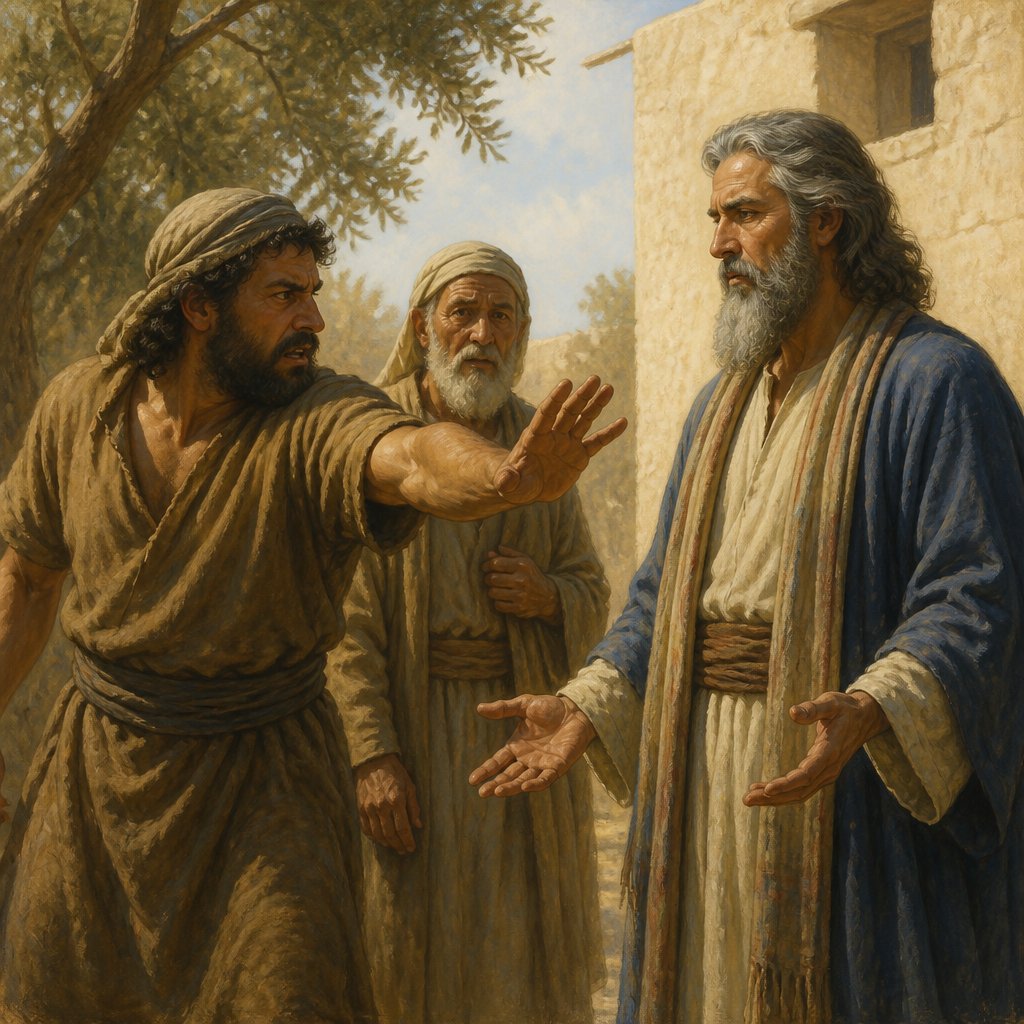
The Bible verse Acts 7:27 from the King James Version reads: "But he that did his neighbour wrong thrust him away, saying, Who made thee a ruler and a judge over us?" This verse is part of a larger passage in the book of Acts that recounts the dramatic speech by Stephen, the first Christian martyr, to the Sanhedrin, the Jewish high court. Stephen's speech serves as both a defense of his faith and a condemnation of the Jewish leaders for their rejection of Jesus Christ.
The context of Acts 7:27 is the retelling of the story of Moses' encounter with his fellow Israelites in Egypt. In this particular verse, Stephen highlights the resistance and rejection that Moses faced when he tried to intervene in a dispute between two Hebrew men. The one who was doing wrong to his neighbor pushed Moses away and questioned his authority to act as a leader and judge over them.
Within this passage, several key themes emerge. One of the primary themes is the pattern of rejection and mistreatment of prophets and leaders by their own people. This theme is a recurring motif throughout the Bible, reflecting the human tendency to resist and reject God's chosen messengers. In this case, Stephen is using the example of Moses to draw a parallel to the rejection of Jesus by the Jewish people and their leaders.
Another important theme is the concept of divine authority. The Hebrew man who rejected Moses' intervention was essentially questioning God's authority to raise up a leader and judge for the Israelites. This theme echoes the broader narrative of God's sovereignty and His right to appoint leaders and judges over His people.
Symbolism also plays a significant role in this verse. The rejection of Moses by his own people symbolizes the rejection of Jesus by the Jewish religious leaders. It serves as a foreshadowing of the ultimate rejection and crucifixion of Christ. Additionally, Moses himself serves as a symbol of leadership and deliverance, as he was chosen by God to lead the Israelites out of Egypt. His rejection by the Israelites reflects the difficult and often thankless task of leadership.
In a broader sense, Acts 7:27 can also be seen as a reflection of the human inclination to resist authority and God's appointed leaders. The rejection of Moses demonstrates the rebellious nature of the Israelites, as well as the broader theme of human sinfulness and disobedience.
Overall, Acts 7:27 is a powerful and thought-provoking verse that carries multiple layers of meaning. It serves as a reminder of the rejection and mistreatment of God's chosen messengers throughout history, as well as a reflection of the human tendency to resist divine authority. Through this verse, Stephen confronts the Sanhedrin with their own history of rejecting God's messengers, while also pointing to the rejection of Jesus as the ultimate rejection of God's authority.
Get our apps


Artwork for Acts 7:27

Acts 7:27 - "But he that did his neighbour wrong thrust him away, saying, Who made thee a ruler and a judge over us?"
"But he that did his neighbour wrong thrust him away, saying, Who made thee a ruler and a judge over us?" - Acts 7:27

2 Chronicles 27:7 - "¶ Now the rest of the acts of Jotham, and all his wars, and his ways, lo, they are written in the book of the kings of Israel and Judah."

Acts 27:7 - "And when we had sailed slowly many days, and scarce were come over against Cnidus, the wind not suffering us, we sailed under Crete, over against Salmone;"

Acts 17:27

Acts 27:26 - "Howbeit we must be cast upon a certain island."

Acts 27:27 - "But when the fourteenth night was come, as we were driven up and down in Adria, about midnight the shipmen deemed that they drew near to some country;"
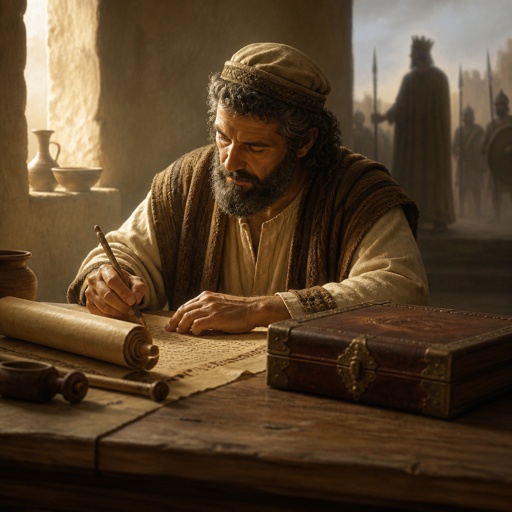
"¶ Now the rest of the acts of Jotham, and all his wars, and his ways, lo, they are written in the book of the kings of Israel and Judah." - 2 Chronicles 27:7

Acts 11:27 - "¶ And in these days came prophets from Jerusalem unto Antioch."

Acts 27:36 - "Then were they all of good cheer, and they also took some meat."

Acts 27:14 - "But not long after there arose against it a tempestuous wind, called Euroclydon."

Acts 27:32 - "Then the soldiers cut off the ropes of the boat, and let her fall off."

Acts 27:18 - "And we being exceedingly tossed with a tempest, the next day they lightened the ship;"

Acts 27:37 - "And we were in all in the ship two hundred threescore and sixteen souls."

Acts 20:27 - "For I have not shunned to declare unto you all the counsel of God."

Acts 26:27 - "King Agrippa, believest thou the prophets? I know that thou believest."

Acts 3:6-7

Acts 3:6-7

Acts 3:6-7

Acts 3:6-7

Acts 3:6-7

Acts 27:38 - "And when they had eaten enough, they lightened the ship, and cast out the wheat into the sea."

Acts 27:19 - "And the third day we cast out with our own hands the tackling of the ship."
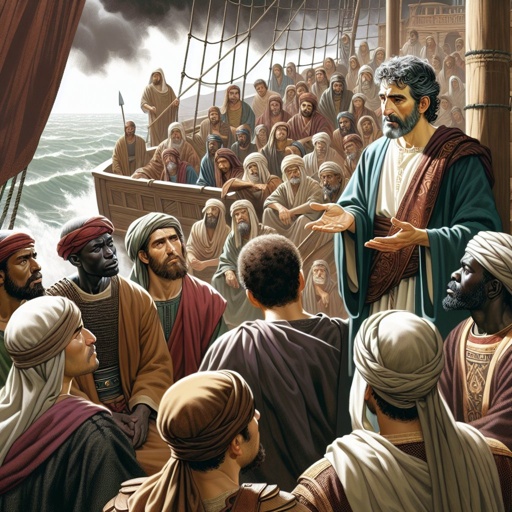
Acts 27:31 - "Paul said to the centurion and to the soldiers, Except these abide in the ship, ye cannot be saved."

Acts 10:27 - "And as he talked with him, he went in, and found many that were come together."

Acts 27:6 - "And there the centurion found a ship of Alexandria sailing into Italy; and he put us therein."

Acts 27:23 - "For there stood by me this night the angel of God, whose I am, and whom I serve,"

Acts 27:42 - "And the soldiers' counsel was to kill the prisoners, lest any of them should swim out, and escape."

Acts 25:27 - "For it seemeth to me unreasonable to send a prisoner, and not withal to signify the crimes laid against him."

Acts 27:25 - "Wherefore, sirs, be of good cheer: for I believe God, that it shall be even as it was told me."