What does Genesis 16:3 mean?
“And Sarai Abram’s wife took Hagar her maid the Egyptian, after Abram had dwelt ten years in the land of Canaan, and gave her to her husband Abram to be his wife.” — Genesis 16:3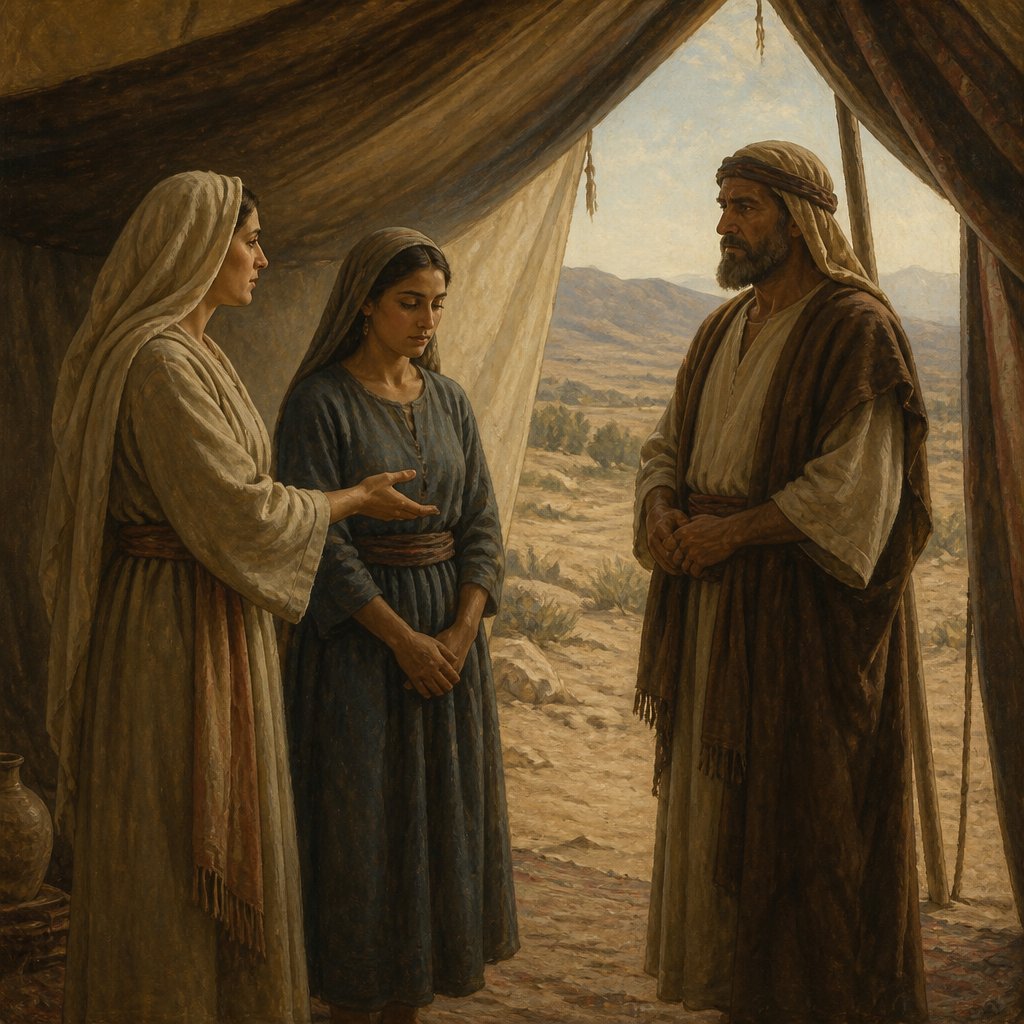
Genesis 16:3 in the King James Version (KJV) reads, "And Sarai Abram's wife took Hagar her maid the Egyptian, after Abram had dwelt ten years in the land of Canaan, and gave her to her husband Abram to be his wife." This verse is a crucial part of the story of Abram (later known as Abraham) and his wife Sarai (later known as Sarah) in the book of Genesis.
The context of this verse is significant in understanding the cultural and social dynamics of the time. Sarai and Abram had been promised by God that they would have a child and become the ancestors of a great nation. However, as the years passed, Sarai remained barren. Feeling desperate and possibly even doubting God's promise, Sarai took matters into her own hands. In a moment of impatience and perhaps frustration, Sarai gave her maidservant, Hagar, to Abram as a wife in the hopes of having a child through her. This action was not uncommon in ancient Near Eastern cultures, where it was not unusual for a barren woman to provide her husband with a servant as a concubine in order to produce an heir.
The themes present in this verse are complex and multifaceted. One of the primary themes is the tension between human impatience and God's timing. Sarai and Abram had received a promise from God, but instead of waiting for God's timing, they took matters into their own hands. This impulsive decision led to a series of consequences and complications that would have lasting effects on their family and descendants. This story serves as a cautionary tale about the dangers of impatience and the importance of trusting in God's timing and faithfulness.
Another significant theme in this verse is the issue of power dynamics and social hierarchies. Sarai, as the wife of Abram, held a position of power and authority over Hagar, her maidservant. In giving Hagar to Abram as a wife, Sarai was exerting her power in a way that took advantage of Hagar's position as a servant. This action highlights the complexities of relationships within ancient societies and raises questions about the ethical implications of using one person to fulfill the desires of another.
The symbolism in this verse is also rich and thought-provoking. Hagar, as a character, symbolizes the marginalized and oppressed. As an Egyptian maidservant, she occupies a lowly and vulnerable position in society. Her story is one of hardship, mistreatment, and ultimately, resilience. Through Hagar's experiences, the biblical narrative addresses important themes such as social justice, compassion, and the inherent value and dignity of every individual, regardless of their social status.
In conclusion, Genesis 16:3 is a verse with deep theological, social, and ethical implications. It raises important questions about human agency, patience, power dynamics, and the treatment of marginalized individuals. The consequences of Sarai and Abram's impulsive actions serve as a reminder of the complexities of human nature and the importance of trusting in God's plan. Additionally, Hagar's story offers profound insights into the experiences of the marginalized and the call to show compassion and justice towards those who are vulnerable. This verse continues to resonate with readers today, inviting us to reflect on our own actions and relationships in light of these timeless themes.
Get our apps


Artwork for Genesis 16:3

Genesis 16:3

Genesis 16:3

Genesis 16:3 - "And Sarai Abram's wife took Hagar her maid the Egyptian, after Abram had dwelt ten years in the land of Canaan, and gave her to her husband Abram to be his wife."
"And Sarai Abram's wife took Hagar her maid the Egyptian, after Abram had dwelt ten years in the land of Canaan, and gave her to her husband Abram to be his wife." - Genesis 16:3

Genesis 3:16

Genesis 16:16

Genesis 3:16 - "Unto the woman he said, I will greatly multiply thy sorrow and thy conception; in sorrow thou shalt bring forth children; and thy desire shall be to thy husband, and he shall rule over thee."

Genesis 16:14

Genesis 16:2

Genesis 16:6

Genesis 1:16

Genesis 15:16

Genesis 16:8

Genesis 16:12

Genesis 25-16

Genesis 16:1

Genesis 18-16

Genesis 16:11

Genesis 17-16

Genesis 16:4

Genesis 16:7

Genesis 23-16

Genesis 16:9

Genesis 16:5

Genesis 20-16

Genesis 28-16

Genesis 22-16

Genesis 16:15

Genesis 16:10

Genesis 24-16